
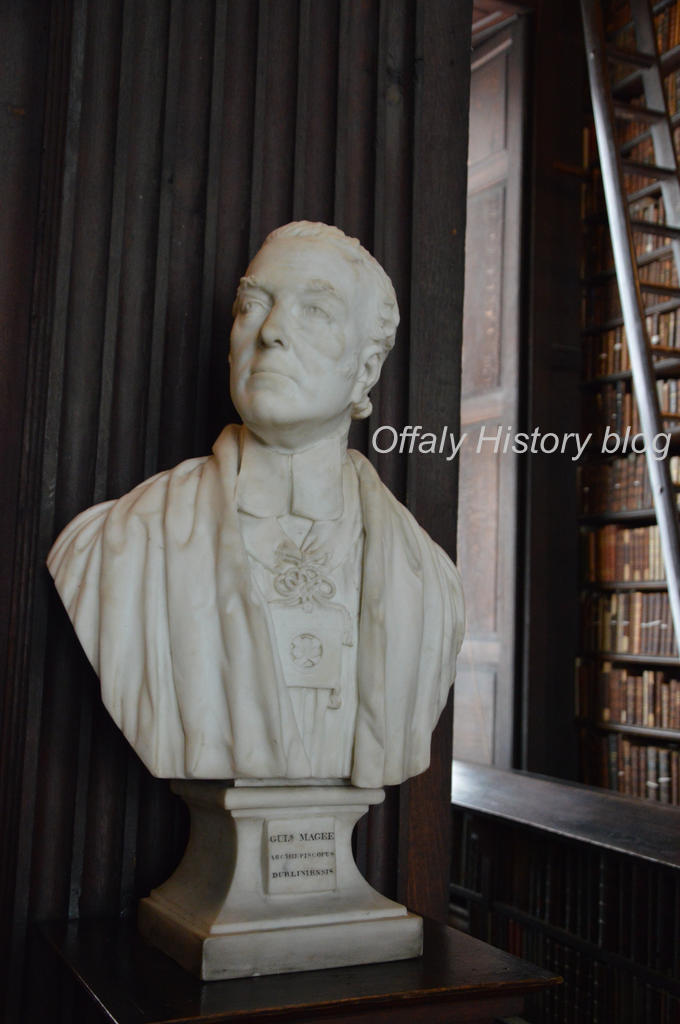
The ‘Second Reformation’ initiated by Magee was marked by:
An exhibition charting the development of the ‘Second Reformation’, one of the most significant periods of nineteenth-century Ireland, is currently running in Birr Library and is open to the public. Furthermore, a public lecture by Dr Ciarán McCabe (QUB) in Birr Library on Wednesday 5 April (at 6.30pm) will discuss the ‘Second Reformation’ (including the infamous Birr Crotty Schism) and the development of the exhibition.
Background
Magee’s charge was delivered at a time when Catholic-Protestant relations were acutely tense. Agrarian protest and intercommunity tensions, which were subject to ebbs and flows, became again inflamed in the period 1819-23. Among the most interesting features of Irish society in the 1810s and 1820s was the prominence of the prophecies of ‘Signor Pastorini’, an English Catholic bishop whose General history of the Christian church (1771) was key to the outbreak of millenarian excitement in the 1820s. Among his prophecies was that the year 1825 would see the destruction of Protestantism. The widespread circulation of Pastorini’s text and his ideas among the Irish peasantry was a source of great embarrassment to the Catholic upper classes but was influential in the Rockite agrarian unrest in Munster in the 1820s. Circulating throughout Ireland just one generation after the sectarian massacres of 1798, Pastorini’s prophecies — insisting on revenge — fuelled Protestant fears of Catholic violence, murder and social upheaval.
Magee’s charge was delivered at a time of year common for public displays of Protestant triumphalism in Dublin city. The day after the sermon (23 October) was the anniversary of the beginning of the 1641 Rebellion, a central event in the formation of Irish Protestant fears of Catholic violence. Early November saw the anniversaries both of William III’s birthday (4 November) and the Gunpowder Plot (5 November), the former being marked by public celebrations at the king’s statue at College Green. Heightened tensions within the city since earlier in the year led to the mayor banning the annual Protestant decorating of the Williamite statue on 4 November. Just four weeks later, a performance oat Theatre Royal was marred by the throwing of missiles at the viceroy (the monarch’s representative in Ireland) by Protestant extremists who saw him as being too sympathetic to Catholic demands.
The Bible War – how it played out
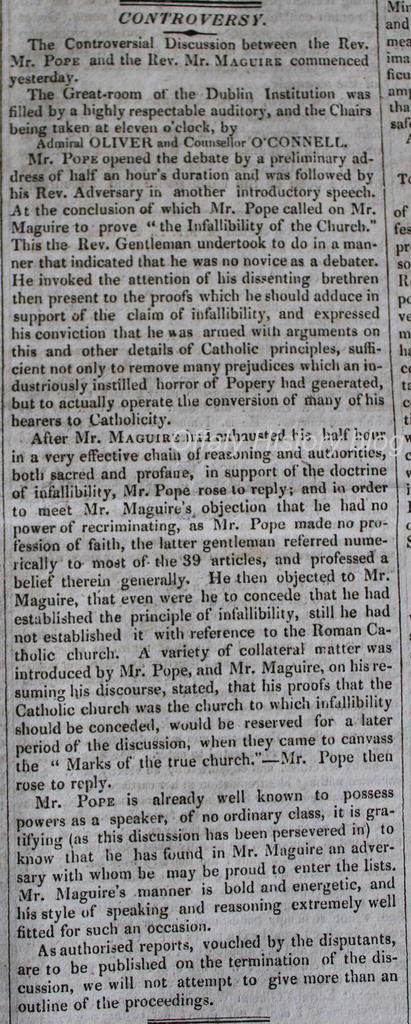
The ‘bible war’ which formed such an important part of the ‘Second Reformation’ saw the emergence of a ‘new spectator sport, in the form of public religious controversy’ (SJ Connolly in Vaughan (ed.), New history of Ireland, v, p. 78). The most notorious debate was that between the Church of Ireland clergyman Rev. Richard Pope and the Catholic priest Fr Thomas Maguire, who debated over six days in Dublin in 1827. The deep-seated hatred and suspicion between Catholics and Protestants were inflamed by an intemperate pamphlet literature. Missionary efforts among evangelical wings of the main Protestant churches and religious societies, already under way since the 1790s, were emboldened and well resourced, and were manifest in the first attempts in over a century to undertake the mass conversion of Irish Catholics.
A case study: the Crotty Schism in Birr
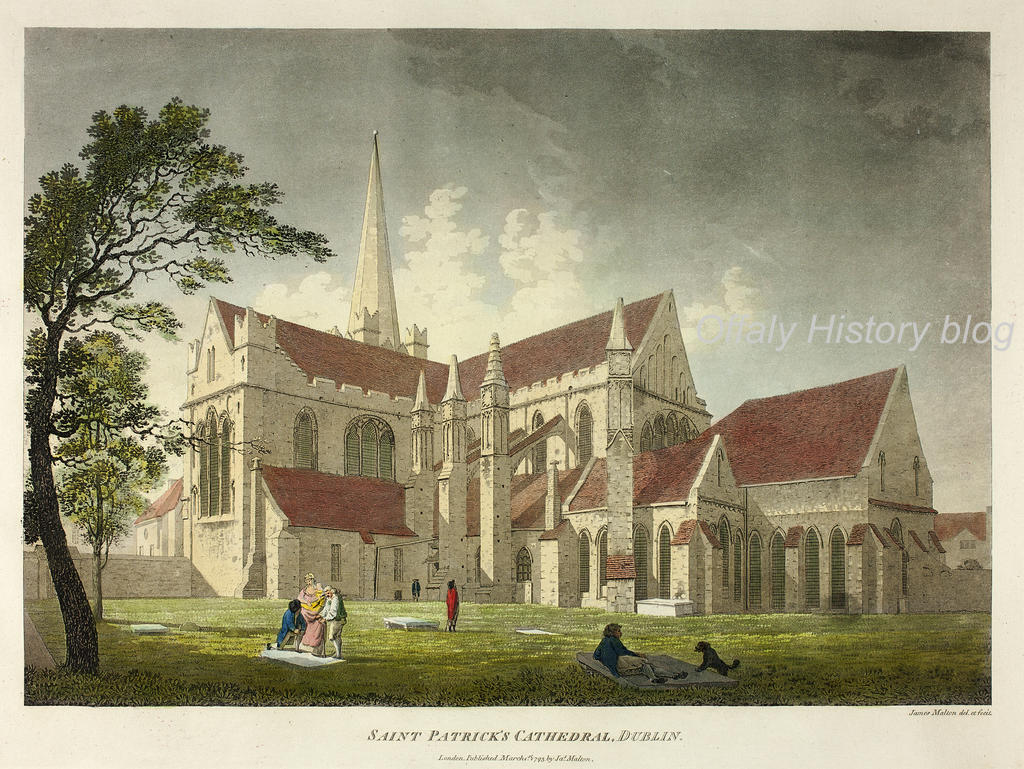
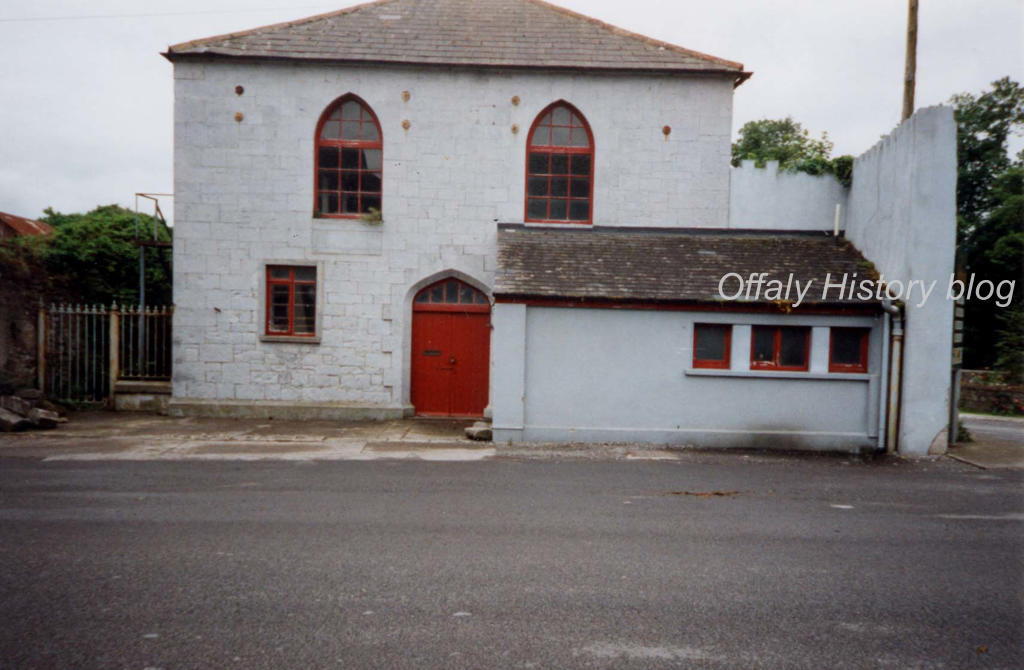
A uniquely bitter schism occurred in Birr, County Offaly (Parsonstown, King’s County) when two cousins — both Catholic priests — converted to Protestantism, taking relatively large numbers of parishioners with them. Revs Michael Crotty (1794/5–1862) and William Crotty (1808–56) amplified a local disagreement with their bishop, concerning the construction of a new Catholic chapel — aided initially by the rising Catholic lawyer Thomas Lalor Cooke (1792–1869) — to sow seeds of discord, riot and, ultimately, schism, to drive a wedge within the local Catholic community, leading ultimately to the Crottys and an estimated 900 supporters adopting an increasingly Protestant theological outlook and taking over control of the recently-completed chapel. Crucially, they also preached to their flock in English and distributed hundreds of copies of the Bible, practices viewed with suspicion by the Catholic Church and associated with Protestant missionaries.
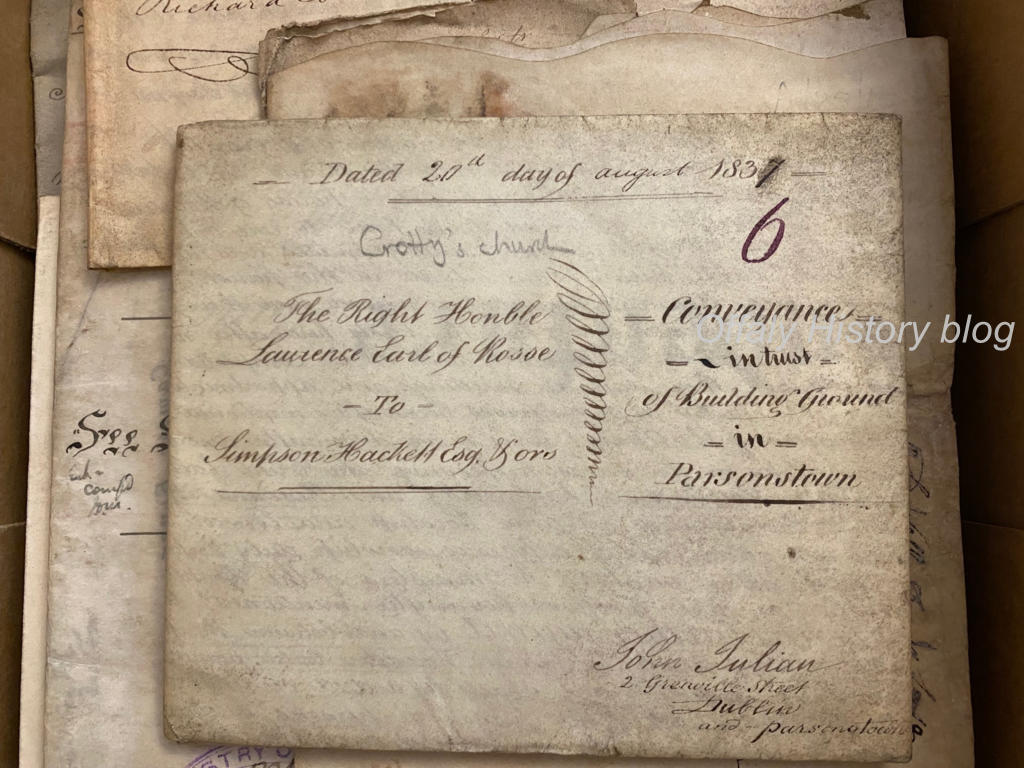
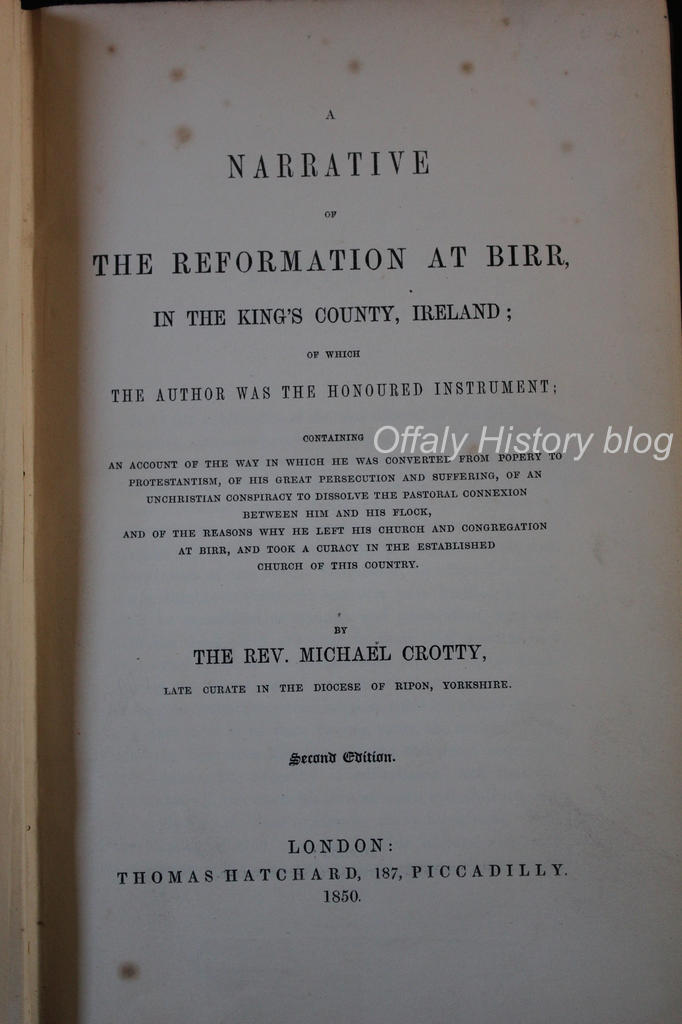
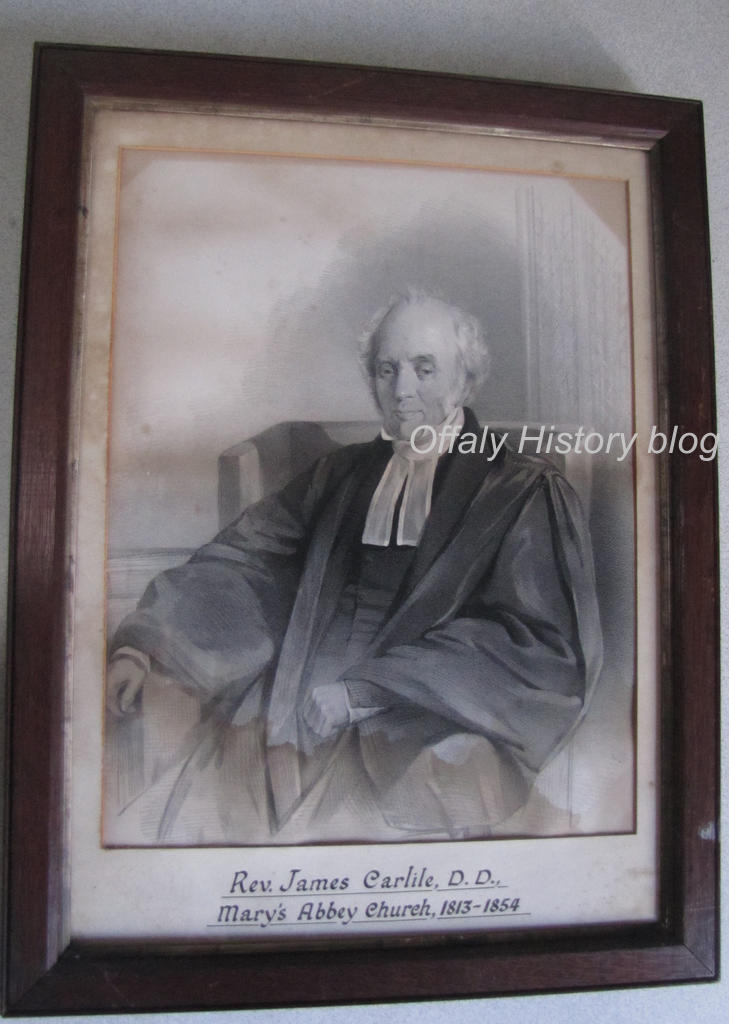
While Michael was absent in England, raising funds for the nascent Birr community who had yet to be affiliated with any church, William and more than one hundred male congregants applied (successfully) for connection with the Presbyterian Synod of Ulster – without Michael’s knowledge. After unsuccessful attempts to reassert his own control over the community, Michael moved permanently to England, where he published his Narrative of the Reformation at Birr (1847; 2nd ed., 1850). In the 1850s he applied for readmission to the Catholic Church and died in Belgium, where he spent time in an asylum for the mentally ill. The Birr congregation, now led by William Crotty, was recognised in 1839 by the Synod of Ulster; they were subsequently joined in the Birr mission by the leading Presbyterian minister, Rev. James Carlile, formerly based at Mary’s Abbey in Dublin. In the opinion of historian C. J. Woods, the story of the Crotty schism is one of ‘a dispute that began over personal mistrust, developed into a schism, and engendered religious reform that went from moderation to extremes’ (entry on Michael Crotty in DIB, www.dib.ie).
Long-term impact of the ‘Second Reformation’
Historian Irene Whelan, the leading scholar on the ‘bible war’ and the ‘Second Reformation’, writes of Magee’s sermon as ‘a turning point in denominational relations in Ireland’ (Whelan, Bible war, p. 269), not so much because of what it revealed of the views of (certain) Protestants towards Irish Catholics but, rather, because of the impact of his charge in mobilising Catholic leaders and wider public opinion behind, and in defence of, their church and religion. The most notable defender of Catholicism in the ‘bible war’ was Bishop of Kildare and Leighlin, James Doyle (‘J.K.L.’), and his instilling of vigour and confidence into Irish Catholicism was reflected just seven months after Magee’s sermon, with the establishment of the Catholic Association, to lobby for the right for Catholics to sit in parliament. Magee’s sermon was significant in the evolving relationship between religion and politics in nineteenth-century Ireland, wherein ‘religious division became so entrenched as to have become virtually a national characteristic in its own right’ (Whelan, Bible war, p. 273).
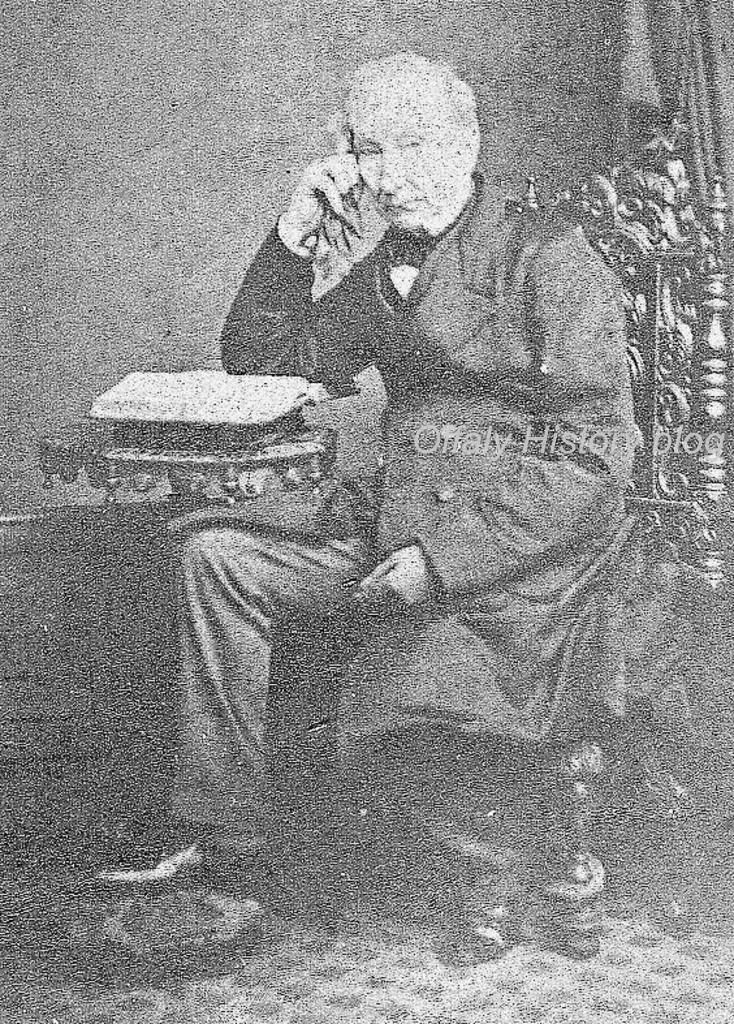
Dr Ciarán McCabe is Lecturer in Modern Irish History at Queen’s University Belfast. He is an historian of Ireland and Britain between the eighteenth and twentieth centuries. Among his many publications are Begging, Charity and Religion in Pre-Famine Ireland (Liverpool University Press, 2018) and, most recently, Dublin and the Great Irish Famine (UCD Press, 2022), co-edited with Prof Emily Mark-FitzGerald and Dr Ciarán Reilly. Ciarán lives in the Irish Midlands and serves as Fixtures Secretary of the Offaly Historical and Archaeological Society.
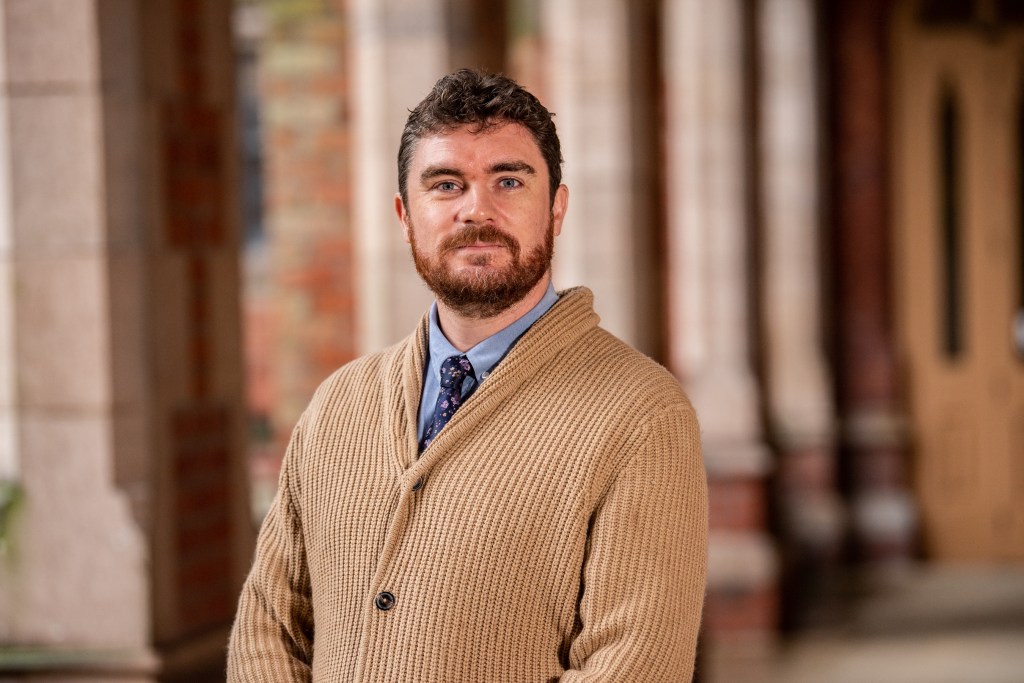
The ’Second Reformation’ exhibition was jointly curated by Dr Ciarán McCabe (Queen’s University Belfast (QUB)) and Alexandra Caccamo (Maynooth University Library Special Collections). The exhibition first ran in the Russell Library, St Patrick’s College, Maynooth from October 2022 to February 2023 and after its run in Birr concludes in the coming weeks, the exhibition will be installed in the McClay Library, QUB for a period in the summer of 2023. The exhibition is financially supported by Offaly County Council, through its Creative Ireland funding stream; St Patrick’s College, Maynooth; Maynooth University; the National Bible Society of Ireland; and the Catholic Historical Society of Ireland. An accompanying online exhibition is available to view at: https://sway.office.com/1WIWE44USN1yHvYP?ref=Link

 offalyhistoryblog