

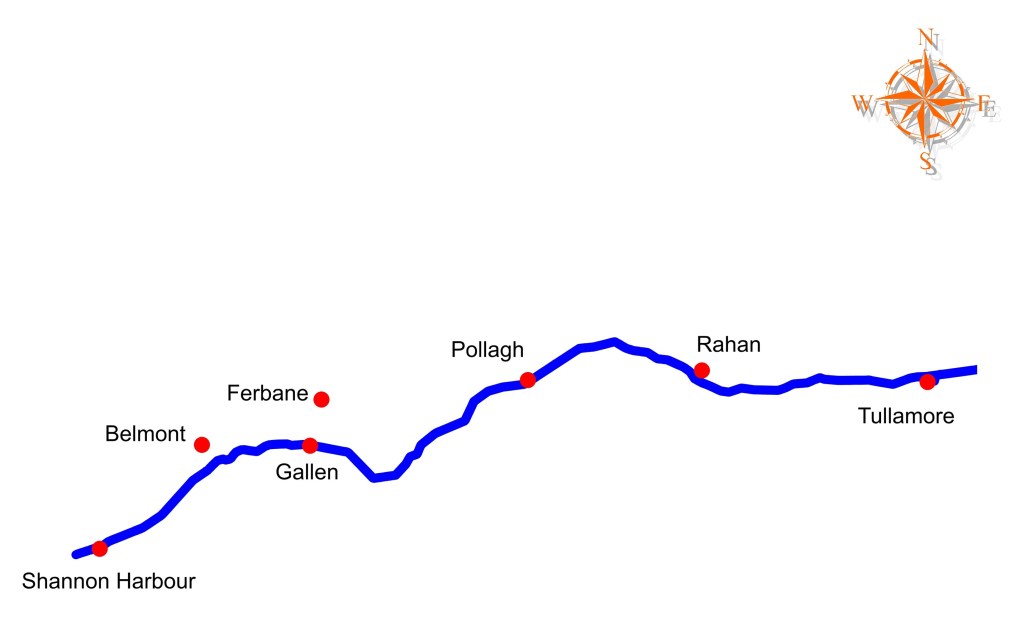
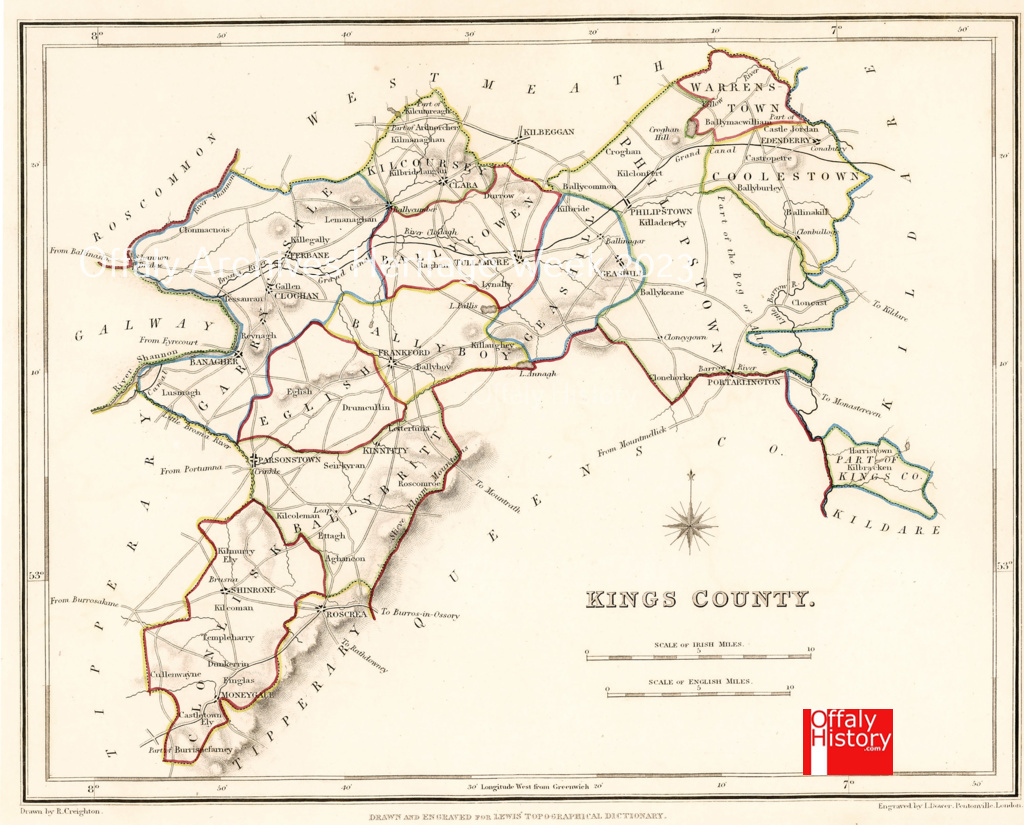
This article looks at the north Offaly towns featured in Major (later general) Vallancey’s report carried out in 1771 and designed to support the construction of the new Grand Canal line to Tullamore and the Shannon. Vallancey was then a young engineer, employed to report to the Commissioners of Inland Navigation and his findings were published in, A Report on the Grand Canal or Southern Line (Dublin 1771).[1] This report is useful as a window on some of the north King’s County (hereafter generally referred to as Offaly) towns and villages.[2]
Vallancey was a British army engineer and it appears was posted to Carrickfergus in the early 1760s and in 1761 was appointed to Dublin as Major of Engineers (to his disappointment not Chief Engineer). Vallancey at this time was eager for work to support a growing family and, among other things, was acting as consultant on canal, harbour and bridge projects.[5] The patronage of Lord Townshend, appointed lord lieutenant in 1767 and said to be a friend of Vallancey from his Eton days, was availed of to the full.[6] Vallancey’s work on the Boyne Navigation was useful in advancing the project and for its comments on the local economy. Two reports had actually issued in 1771 on canal construction. The first was that prepared by Vallancey and the second by John Trail – the latter employed by Dublin Corporation. The line of the canal had been selected in 1755 with the adoption of the more southerly route from Dublin to the Shannon via Philipstown (Daingean) and Tullamore which had become known as the ‘Grand’ route as distinct from the ‘Royal’ or northern route. The project, had from 1751, been overseen by Commissioners but in 1772 a company was incorporated by statute to take over the construction of the canal. It was at this time that the new Company of Undertakers of the Grand Canal began to acquire land along the route at £6 (Ir) per acre or 23 years purchase.[7]
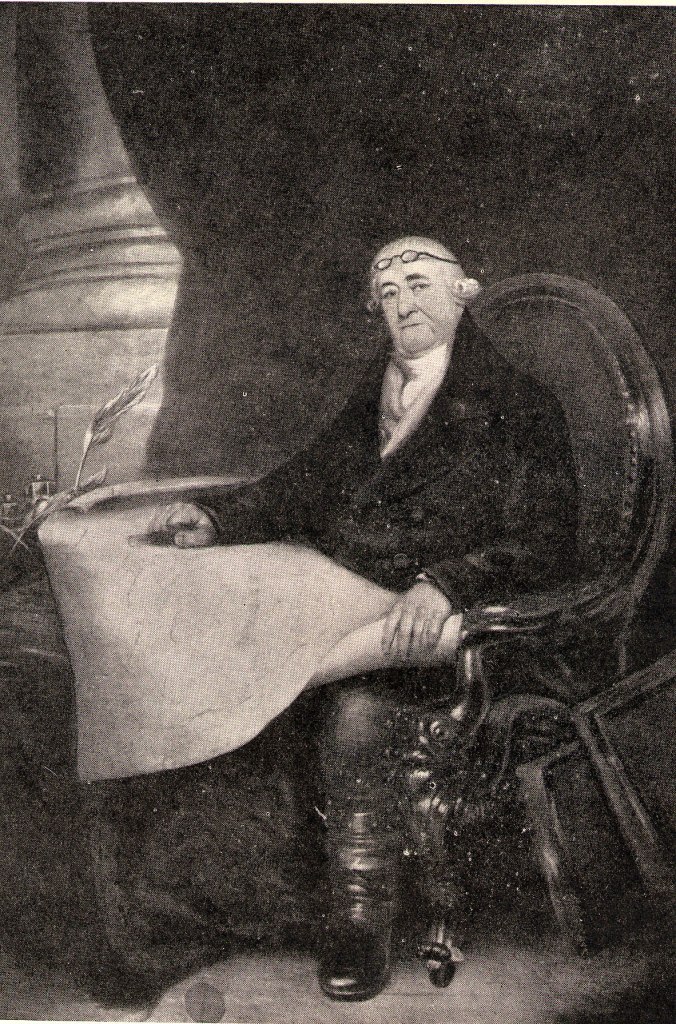
Having looked at the general background in no. 2 in the Grand Canal series best move to the report itself. For more on developments at Edenderry see the J.J. Reilly article no. 21 in this series. Vallancey was impressed with the growth of the linen industry in Clara, Ferbane and less so in Tullamore. Edenderry was dependent on the woollen industry and to a lesser extent Daingean which was very much in need of employment.
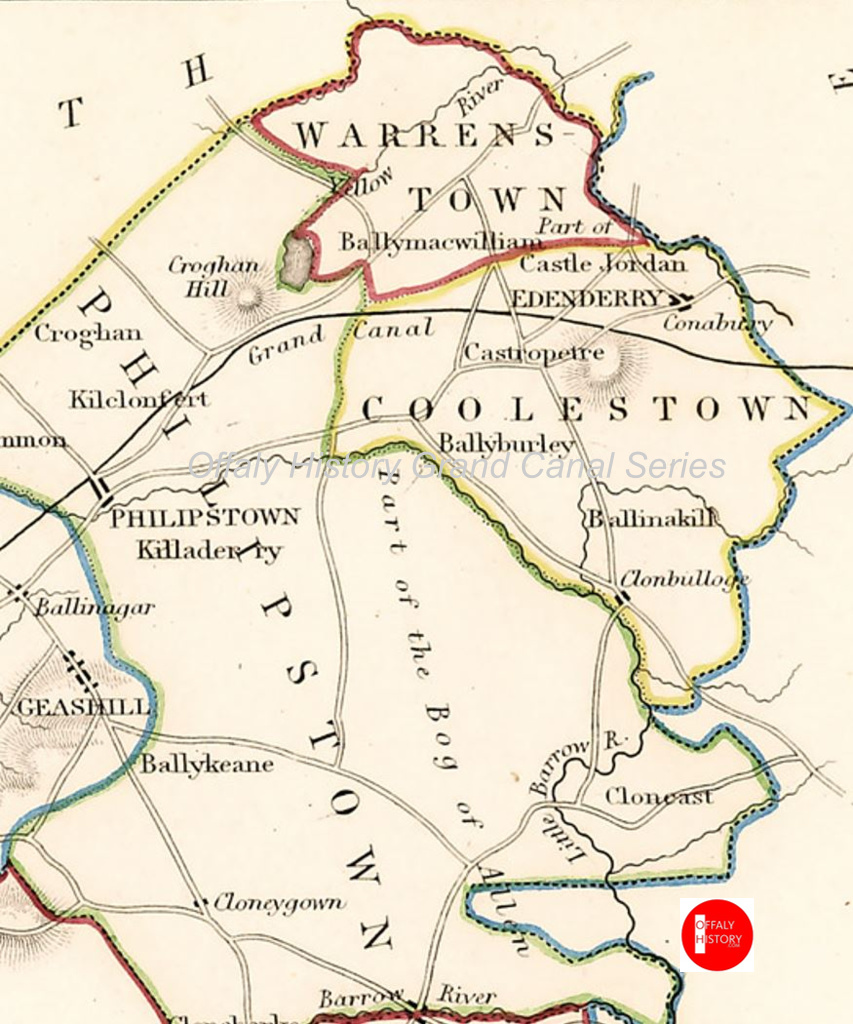
The north Offaly towns described in Charles Vallancey, A Report on the Grand Canal, or Southern Line (Dublin, 1771), pp 26-33, 37, 59
Edenderry
Barony Coolystown.
Town Edenderry.
Parish [Monasteroris]
Soil Clay on Lime-stone.
Manure Limestone Gravel and Dung.
Produce A few Years ago Arable, of late Pasturage.
Rent From 12 to 40 Shillings per Acre
Mines Lead
Quarries Lime-stone
Fuel Turf
Labour From six pence to ten pence
Provisions Meal 28 shillings per Ct. Beef and Mutton 3d. and 4d. Milk 1d. a Quart, Bread from Dublin, very bad and very deficient in Weight.
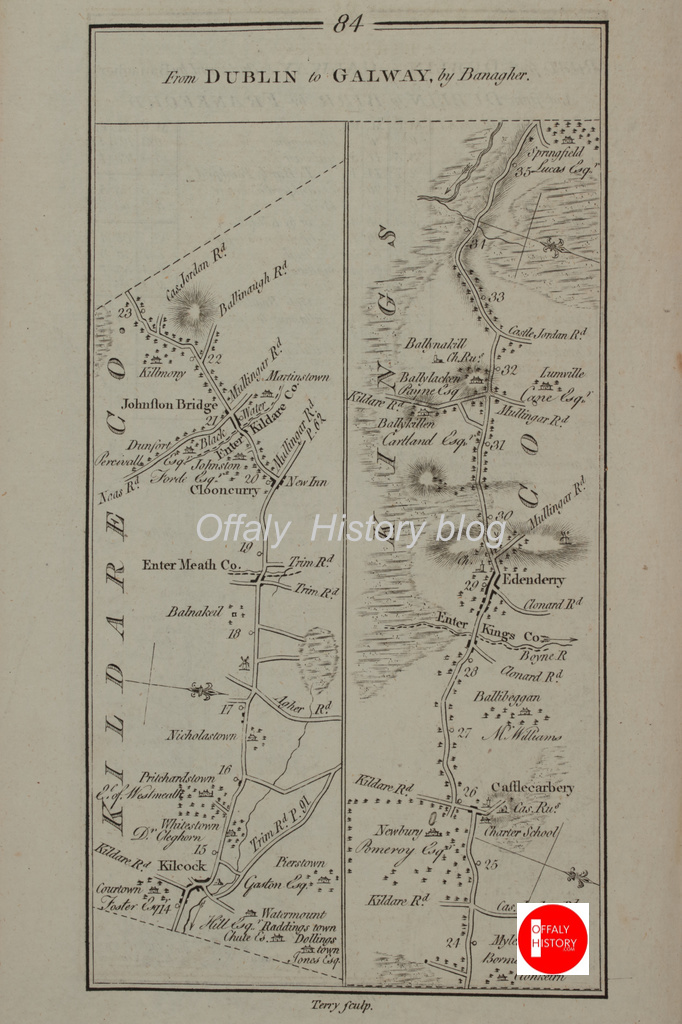
Employment for the Poor in Edenderry, Spinning of Worsted, [the principal enterprise]
This neighbourhood [of Edenderry] a few years ago was remarkable for its corn markets. At present it grows little more than what the inhabitants and whiskey distillers consume. The poor are employed in carding and spinning of wool, but although provisions have doubled the price, that of labour in this manufactory remains as it was fifty years ago. The carders earn six pence and the spinners three pence per day. The wool is brought from Dublin, at two shillings and six pence per cwt. which wool probably passed through this town, some months only before in its way from Ballinasloe. Kilkenny Coal sells for 18 pence per cwt. Lime 13 pence per hogshead, turf 9 pence per kish, every article of life, particular viands, is much dearer here than in Dublin, the peasantry are starving, and nothing would contribute so much to their relief as an inland navigation. The proposed canal would pass about four miles distant from this town. The lead mines have been neglected for some years and were never worked with spirit or judgment.
Philipstown [Daingean] in 1771
Barony Philipstown
Town Philipstown
Parish Kildeny [Killaderry]
Soil Clay on Limestone
Manure Limestone Gravel and Dung
Produce Pasturage has entirely taken place of Tillage
Rent From 16 to 30 shillings per Acre
Mines,
Quarries Limestone
Fuel Turf
Labour From 6d. to 8d. and 12d. in Harvest
Provisions Meal 27s. per Cwt. Beef 3½ , Mutton 3d. Bread thrice a
week from Dublin
This [Philipstown] and the adjacent Parish of Kilclonfert, is mostly arable. I am informed by Mr. Collgan [sic] who fills up the tickets for land carriage that 2,000 barrels of wheat are annually sent to Dublin from this part. Provisions are extremely dear, and no manufacture of consequence going on, except a few hats and brogues. The town is full of idlers and beggars. The wool is sent from hence to Mullingar, and there bought up for Dublin; this extra carriage will be avoided when the navigation is finished, as the canal is proposed to touch the town. Provisions also would be more reasonable. They are at present dearer than in the metropolis, being chiefly brought from thence, bread and meal in particular, and the poor would starve, but for the little circulation of money from the troops quartered here [Philipstown served as the county town until 1835 and had a military barracks]
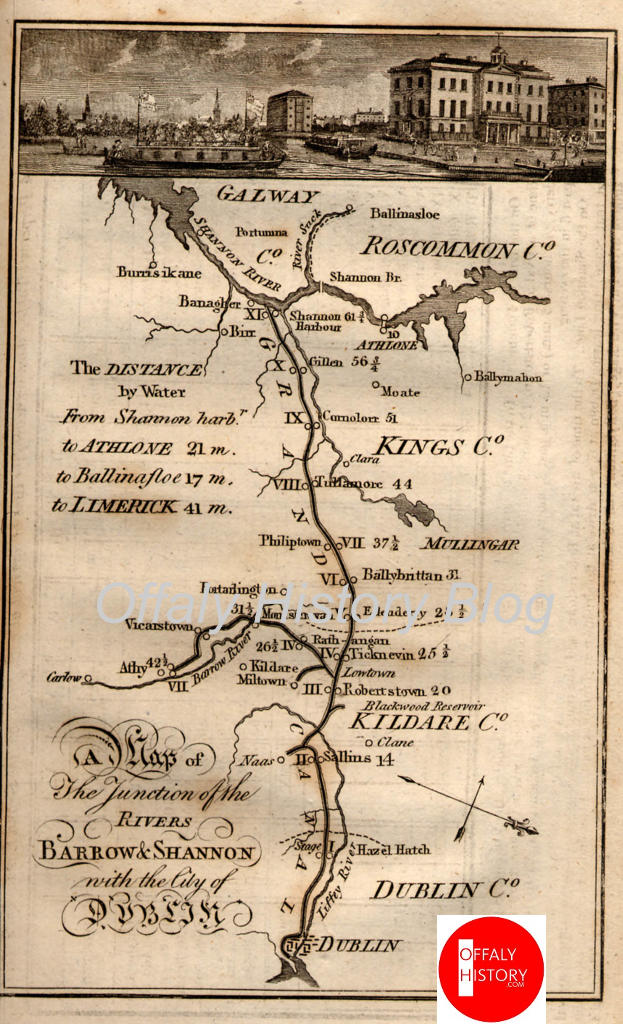
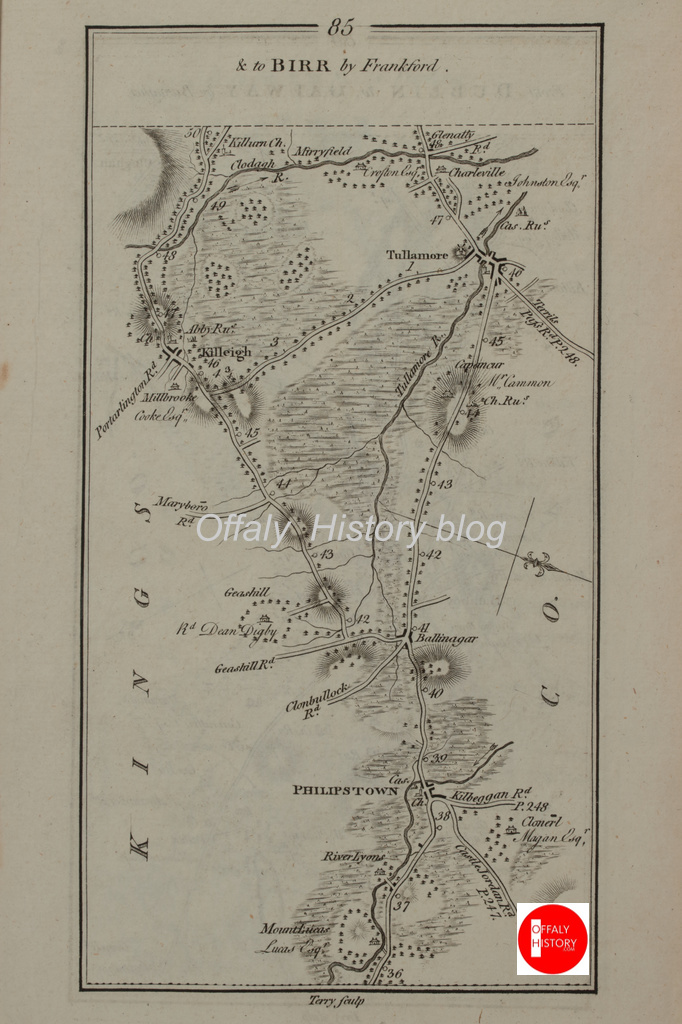
Tullamore
Barony Ballycommon [Ballycowan]
Town Tullamore
Parish Kilbride
Soil Yellow and Blue Clay on Limestone
Manure Limestone Gravel and Dung
Produce Mostly Pasturage Rent From 10 to 30 Shillings per Acre
Mines,
Quarries Limestone
Fuel Turf
Labour From six pence to ten pence [Per day]
Provisions Meal 30 shillings per Cwt
Employment of the Poor in Tullamore in 1771
The lands about this town [Tullamore] are designed by nature for tillage, and a few years ago abounded with all kind of grain, but it is computed that within ten years, three fourths of the arable ground has been turned to pasture. The soil is too wet for sheep, and they die of the rot. I am told that limestone gravel wears out on this soil in two years, and the herbage becomes so sour, cattle will not feed on it. There is daily some bog ground reclaimed in this neighbourhood, but the farmers want proper manure, which they could readily obtain by water carriage, was the navigation completed, there being plenty of shell marle a few miles distant down the river: In this neighbourhood is good potters clay, and some very good for bricks [west of Tullamore] The late Mr. Lezante [Laurent] built a large dwelling here, and established forty linen looms in it, which are kept constantly employed in linen and cotton. Connaught supplies them with yarn chiefly, but the excessive cost of bleaching articles, brought by land carriage from Dublin, keeps this manufacture in low state. Tanned hides is another great article of carriage from hence to Dublin, and this seems to be a very proper situation for the tanning trade, there being many small woods in the adjacent countr [There were tanneries in Tan Yard Lane and Distillery Lane.] Throughout this part of the King’s County, they plant the small leaved English ash tree, which grows remarkably well in hedge-rows I measured one at Lea Castle [near Portarlington] which girths twenty-four feet, and another in Edenderry avenue which girths seventeen feet, but these are uncommon, in general they grow the tallest and straightest timber I have ever beheld.
Clara in 1771
Barony Killcoursey [Kilcoursey]
Town Clara
Parish [Kilbride]
Soil Clay on Limestone
Manure Dung, Lime
Produce Grain and Pasturage
Rent From 50s. to 4ls., per acre
Mines
Quarries Limestone
Fuel Turf
Labour 6d. to 10d. Winter, 12d. to 14d. Summer
Provisions Dearer than in Dublin
Employment of the Poor Spinning of Flax
The village of Clara contains about 200 well built houses, a large flour mill, a good bleach yard, and a buck house at a convenient distance, all which is the happy effect of the industrious spirit of the landlord [Armstrong of Clara House] who with an ample fortune does not disdain to enter into trade, as well for the increase of his own fortune, as for the sake of affording a comfortable livelihood to his tenants. Six years ago there was but one poor house in this village, and that a sorry inn: He has now brought together in this neighbourhood as many linen weavers as keep 600 looms at work. The yarn is bought up chiefly in Connaught, the ashes, and other heavy articles for bleaching, come from Dublin by land carriage, which (if the proposed navigation was finished) would be brought by water to Ballycumber on the Brosna River, on which this village situated. There is also a large hat manufactory established here, for the use of the army. The arable ground is much reduced in this part of late: they buy most of the wheat for their mills at Athlone, fourteen miles distant, and that town is also the market for their flour. The poor in this part of the kingdom are all employed; there are no beggars to be seen in this county, but at Philipstown.
Ferbane in 1771
Barony Garrycastle
Town Firbane
Parish [Wheery]
Soil Clay on Limestone
Manure Lime, Dung
Produce Mostly Grain
Rent From 16 to 40 Shillings per Acre
Mines,
Quarries,
Fuel Turf
Labour 6d. and two meals in summer, valued in all at 14d. Summer and Winter.
Provisions Mutton and Beef 3½ to 4d. Oat-meal 28s. per Cwt. Butter
6d. Cheese made here 30s. per Cwt.
Employment of the Poor Spinning of Flax
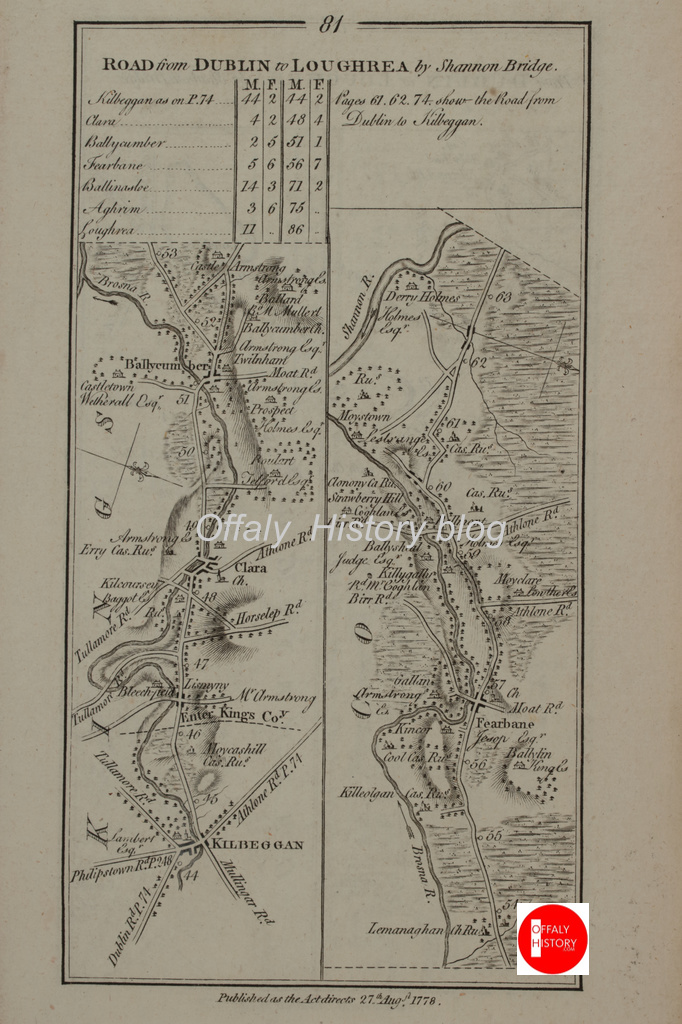
This Village [Ferbane] does not contain more than 60 decent cabins, and yet the good example set at Clara, has caused 200 linen looms to be erected here in the space of three years. Two gentlemen of small fortunes in this neighbourhood have established this manufacture with uncommon spirit. There is a weekly market for yarn here, as well as at Clara, besides two fairs annually; this keeps the women constantly employed: I spent some hours with great pleasure in the yarn market, and was well pleased to find the great quantity then in the market, was spun within the distance of five miles; some women had five pounds worth, the produce of six month labour, and all was the remains after the family had been clothed. But yet there appeared a want of regulation here, to ascertain the quantity spun in the environs, there was no particular place for weighing. And in default of this knowledge, these gentlemen had lately set up 60 looms more than they could employ. Provision is full as cheap here as at any other place in this part, and yet labour is dearer. There are four whiskey distillers in this little village who it is much to be feared will soon destroy the present industrious disposition of its inhabitants; all the linen made here is bleached at Ballycumber and Clara, though the last place finds sufficient employment from its own looms; as I passed through Ballycumber, I computed 60 acres covered with linen.
Moystown is a very inconsiderable village, on the Brusna, near the Shannon, and has some looms at work; in short all this part of the county, which in my memory wore the aspect of a deserted waste, has, within a few years, put on such a decent clothing, as scarce to be known, but by its inhabitants, or those who frequently travel through it.

[1] The item is referred to in the Bradshaw catalogue at no. 1994 as A Report on the Grand Canal, or Southern Line . . . Published by Order, and at the Expence of the Board of Inland Navigation. Dublin: Printed by Timothy Dyton, Bookseller in Dame-street. 1771. The pamphlet is not listed in Black, A catalogue of Economic Subjects (1969). The Royal Irish Academy copy is at reference HT Box 428/1 (shelved in SR/ Bay 40).
[2] Few accounts are available before 1800 for a bibliography see John McVeagh, Irish travel writing: a bibliography ( Dublin, 1996).
 offalyhistoryblog