
Did you have old friends or family in Church Street 125 years ago? Probably not. It was a busier trading street 125 ago than it is today. That could be said even sixty years. As to its trade it probably suffered from the introduction of one-way systems and restricted parking in the 1960s. Yet another factor may well have been the closing of the markets in Market Square, and also the decline of the Methodist community in the street. Back in 1901 and further back to the first printed valuation of the mid-1850s it had about 57 rateable units – almost all private houses and shops, but also including Hayes’ Hotel, the Methodist church, the Costello private second-level school, the county infirmary (from 1942 the County Library), Charleville School (until 2006) and the Foresters Hall and Shambles (the meat and veg market).
Church Street is an interesting street to study with a good mix of mostly middle-class housing, good shops and trades, institutions, and good terraces with lots of boarders and lodgers to add novelty.
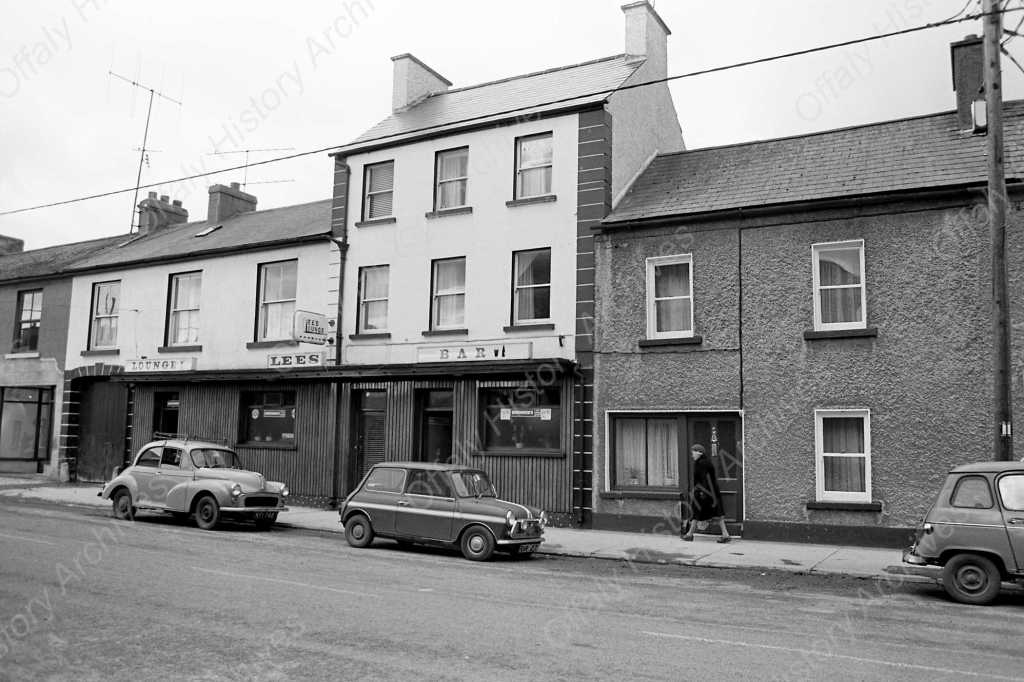
The houses in Church Street were all in the first- and second-class categories as set out in the 1901 and 1911 censuses. In 1901 the street had six public houses when one includes the hotel with its pre-1902 licence, and one (the former Graham pub, later Williams/Wyer) was not trading at the time. All the pubs save the hotel were on the north side of the street and the furthest east was that of Graham-Williams (later from the 1960s Wyer’s).


The pubs in 1901 were:
- John J. Healy – to the east of Tullamore Drapery
- Owen Wyer and his sister Teresa was the publican (where the Roma Grill is today or to the right of it)
- Richard Condron west of Joe Lee’s on the corner – probably later the Hole in the Wall
- Healion’s – later Joe Lee’s
- The Graham Williams pub was not included in the census and may have been closed at the time of the census of 1901. It was listed under the name of James Lynch as head of household in 1911.
- Hayes’ Hotel with its full pre-1902 licence from c. 1785 until the closure of #1 (now Boots pharmacy) in 2007.
Other shops included a millinery, a boot shop, drapery (3), grocery, hair dressing, and ‘entertainment house’. The street has only one manufacturing concern the Egan-owned former Sterling mineral waters and bottling concern, west of what is now Joe Lee’s (formerly Healion’s). For Stirling’s see an earlier blog on Church Street by Noel Guerin.
The centre of commercial operations was the older and narrower part of Church Street from the the juction with William/Columcille Street to the link to Market Square, beside what used to be the Hole in the Wall, west of Lee’s pub. The three draperies on the street were Warren (two shops, see photograph) and east of the hotel and opposite Warren’s was Browne’s drapery. West of Warren’s was the millinery of Bridget Brien and the boot shop of Bridget Farrell. By 1911 the well-known and remembered Morris Drapery was taking the lead in that sector and continued to trade until about 1990. In 1901 the Morris shop was occupied by Andrew Anderson as a grocery and beside it was the shambles.
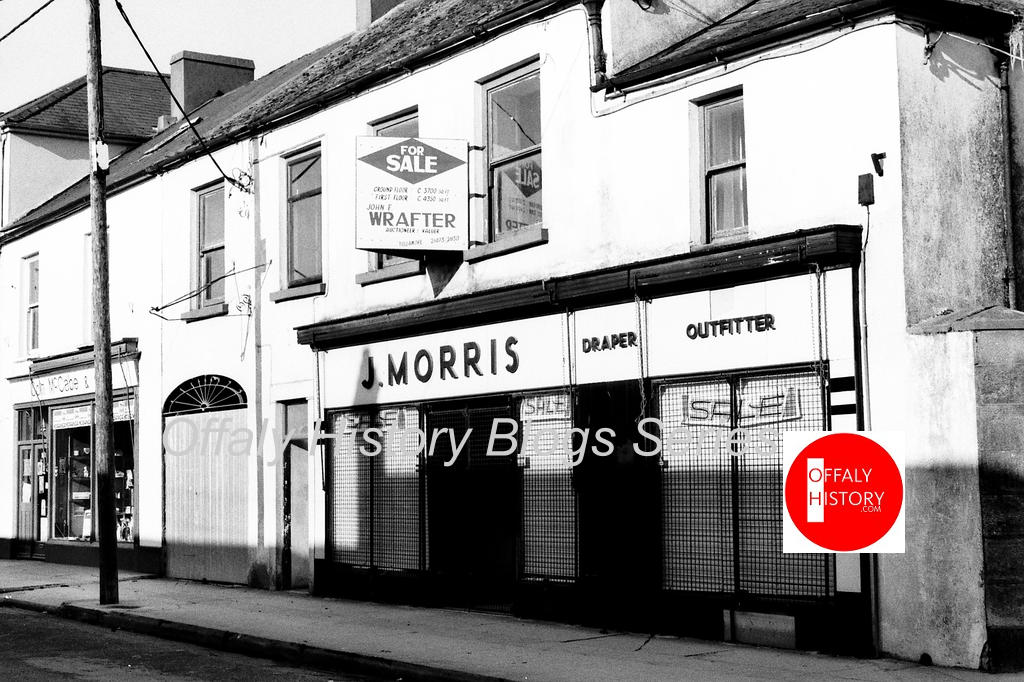
The terraces from the Methodist church to the animal pound west of the river and beside Pound Bridge were residential.
Also west of the river on the northern side was Feehan’s house and fowl business (big operators) and now (2025) rebuilt as ten units for accommodation.
Most of the heads of families on the street were ‘gainfully occupied’ and in employment or retired. The scope of opportunities reflected a town with little in the way of manufacturing save in malting, brewing and distilling. The tobacco factory departed the town in 1886 after a disastrous fire and was not replaced until Salts woollen mill was opened in 1938 and in the same years the creamery and bacon factory on Church Road.

Occupations in Church Street in 1901, not already mentioned, included:
A maltster, a retired builder, a head gardener, several commercial clerks (probably working in Williams and Egan), a dressmaker, two bootmakers, some farmers and agricultural labourers, army pensioners, bakers and bread van driver, the staff in the infirmary. Some Revenue people, business managers and bank clerks boarded in the terrace of three-storey houses between the infirmary and the Methodist church. The street had one hairdresser (may have preceded the later Clake’s barbers), a plasterer. The street had one Methodist clergyman.
Of the 59 listed houses and premises those with a commercial or mixed use numbered about 25 and included, one hotel, one church, two schools and the infirmary. A few had no residential element such as the three units related to the mineral water factory and the nearby Shambles; the Methodist church and the Charleville School (see the blog on it). The second school was in a dwelling house and was that of the Misses Costello Tullamore Select Academy (or locally according to the late Paddy Lloyd Tullamore Silly Asses). This was located in the Georgian terrace east of the Methodist church (as was the Gael Scoil much later).
The infirmary (now Library Hall – see earlier blog) had a staff of under ten and the number of patients on census night 1901 was in the range of about 18 to 25. Several women operated boarding houses and kept lodgers mainly in the two terraces between the Methodist church and the pound west of the river.
The average number of dwellings occupied in 1901 and 1911 was about 50 with another 7 to 9 non-residential or not occupied on census night. The religious breakdown was as follows:
Table 1: Population and religion in Church Street in 1901 and 1911
| Year | Population | RC | CoI and Episcopalian | Methodists | Presbyterians | Baptists |
| 1901 | 255 | 209 | 20 | 18 | 7 | 1 |
| 1911 | 272 | 217 | 30 | 21 | 3 | 1 |
Church Street was more middle class than working class. Valuations of the c. 57 buildings in 1854 was generally £8 along the terrace east of the Methodist church and with a similar rating on the commercial north side from what is now Supermac’s to Joe Lee’s. The few poor houses were behind the hotel and valued at £1. 10s were double the valuation of the 12 houses in Market or Pike’s Lane behind what is now the Chinese restaurant and connecting in with Market Square.

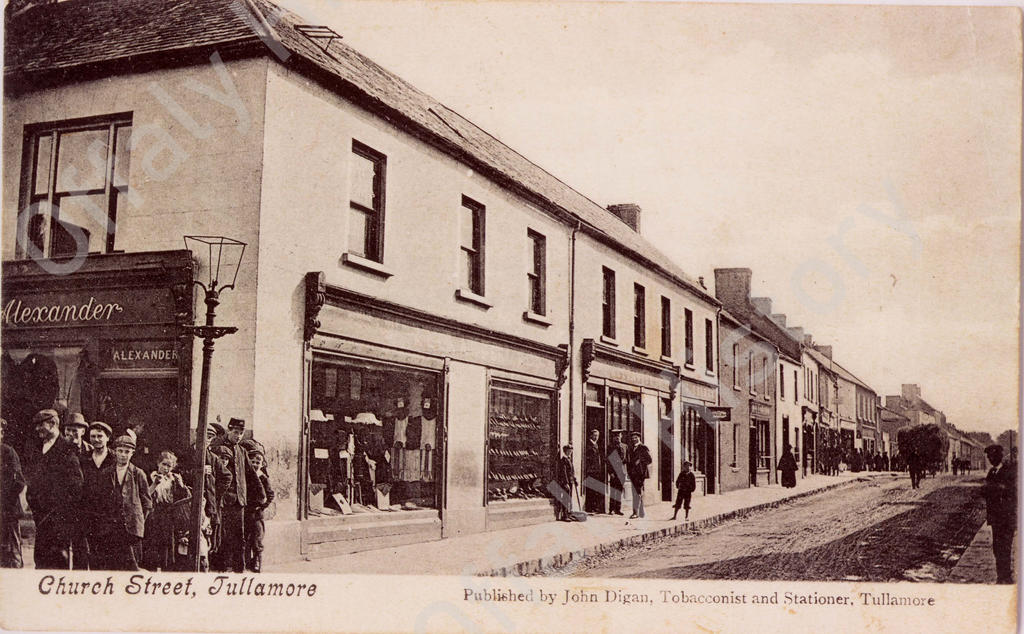
About 50 of those living in the street were non-RC. About 45 people were servants and shop assistants, but this included 11 servants in Hayes’ Hotel taking care of five guests on census night 1901 in 1901. The owner, James Hayes, lived with his family in O’Connor Square and so too did Abraham Colton of the hotel in High Street. Many Church Street houses kept boarders and one landlady (Margaret Johnson beside the pound, no 32) had six lodgers and one boarder. The latter could be described as family connected so that of the twelve in the house seven were family and five were lodgers.
In all there were 26 boarders and 8 described as lodgers. However, some of those described as boarders were also working in the shop. The more typical boarders were three bank officials in no. 47 and one revenue official in no. 48. More than half of those described as boarders in Church Street were clearly not working in the same house as assistants. That said of the eight described as lodgers two were staying in Hayes’ hotel. More on this in the next blog on Church Street when we look at the 1911 census in the context of continuity and change in that street in the ten years. We also look to see was Church Street a so called ‘flatland’ in those days in the sense that those resident in 1901 and 1911 were strictly not ‘family’ but coming under the boarder, lodger, servant, shop assistant categories.
Upwards of ten women were in business on their own account include the fowl dealer Mrs Feehan, the Julia Browne drapery, the Misses Costello (the only graduates on the street –women graduates of the Royal University).
1901 Census Church Street: a summary. May be best to open on a desktop. Edited by removing class of house, number of families and the enumeration of family and others. See the full census online at Ireland census 1901 from National Archives of Ireland. The house numbers do not correspond with the Griffith Valuation or the 1911 census. Here they start after the Tullamore Drapery shop continue to the river on the Charleville school side and back up to Hayes’ Hotel.
| House no. | Building use | Name of ‘head’ of family | Occupation | No of rooms occupied | Total no. of persons In each ‘family’ | Religion |
| 1 | Public House | Healy John J. | Wine Merchant | 7 | 3 | 3 RC |
| 2 | Millinery | Brien Bridget | Milliner | 4 | 2 | 2 RC |
| 3 | Public House | Wyer Owen | Maltster and sister Teresa publican | 12 | 4 | 4 RC |
| 4 | Boot Shop | Farrell Bridget | Boot Assistant | 3 | 2 | 1 RC 1 Presbyt |
| 5 | Outfitting (drapery) | Hubert J Warren | Outfitter | 8 | 6 | 5 Meth |
| 6 | Drapery | Warren Elizabeth C | N/A | 8 | 3 | 2 Meth 1 RC |
| 7 | Grocery Shop | Anderson Andrew | Grocer & Farmer | 12 | 7 | 6 Presby 1 Methodists |
| 8 | Shambles | Not occupied | – | – | – | |
| 9 | Public House | Condron Richard | Publican, Shopkeeper& Auctioneer | 5 | 5 | 5 RC |
| 10 | Mineral water factory | -Not occupied | – | – | – | |
| 11 | Bottling stores | – Not occupied | – | – | – | |
| 12 | Wholesale spirit merchant | -Not occupied | – | – | – | |
| 13 | Public House | Helen Mary Healion | Publican Shopkeeper | 8 | 8 | 8 RC |
| 14 | Private Dwelling | Michael Murphy | ? | 5 | 6 | zz |
| 15 | Private Dwelling | Egan John | Retired Builder | 8 | 3 | 3 RC |
| 16 | Entertainment house | Smollen Michael | Hd Gardener | 6 | 4 | 4 RC |
| 17 | Public House or Private Dwelling | Not occupied | – | – | – | |
| 18 | Private dwelling/printing office | |||||
| 19 | Private Dwelling? | Duggan William R | Bootmaker | 12 | 4 | 3 Meth 1 COI |
| 20 | Private Dwelling | Graham Edward John | Clerk of Union | 9 | 9 | 9 RC |
| 21 | Private Dwelling | O’Loughlin Patrick F | Commercial Clerk, Wholesale Wine and Spirit Trade | 6 | 6 | 6 RC |
| 22 | Private Dwelling | Mc Manus Henry | Boot Maker | 4 | 4 | 4 RC |
| 23 | Private Dwelling | Murray Patrick | Farmer | 4 | 3 | 3 RC |
| 24.1 | Private Dwelling | Hutchinson Margaret | Dressmaker | 2 | 1 | 1 RC |
| 24.2 | Private Dwelling | Murray Elizabeth | N/A | 2 | 2 | |
| 25 | Huckster and private dwelling | Scott John | Agl Labourer | 4 | 7 | 7 RC |
| 26.1 | Private Dwelling | Mawe John | Harness Maker | 3 | 3 | 3 RC |
| 26.2 | Private Dwelling | Butler Mary | N/A | 1 | 1 | 1 RC |
| 27 | Private Dwelling | Hynes Patrick | Army Pensioner | 4 | 2 | 2 RC |
| 28 | Charleville School | Norris David G | B.A.T.C.D Schoolmaster | 9 | 3 | 2 Irish Church 1 RC |
| 29 | Private Dwelling | Lynham John | Private | 4 | 2 | 2 RC |
| 30.1 | Private Dwelling | Mahon Michael | Maker Water Factory | 2 | 2 | 2 RC |
| 30.2 | Private Dwelling | Fitzgerald Catherine | N/A | 2 | 2 | 2 RC |
| 31 | Private Dwelling | Feehan Mary | Fowl Dealer | 7 | 12 | 12 RC |
| 32 | Private Dwelling | Johnson Margaret | N/A | 4 | 12 | 12 RC |
| 33 | Private Dwelling | Byrne Patrick | Bread Van Driver | 3 | 6 | 6 RC |
| 34 | Private dwelling | Cooke Mary | Landlady | 4 | 6 | 6 RC |
| 35 | Private Dwelling | Buckley Charles | Baker-Foreman | 4 | 5 | 4 RC 1 ch of England |
| 36.1 | Private Dwelling | Larkin William | Agricultural Labourer | 3 | 4 | 4 RC |
| 36.2 | Private Dwelling | Lloyd Robert | General Labourer | 1 | 3 | 3 RC |
| 36.3 | Private Dwelling | Conroy John | Shop Messenger | 2 | 2 | 2 RC |
| 37 | Private Dwelling | Tyrrell Patrick | Genl Labour | 2 | 5 | 5 RC |
| 38 | Infirmary | Hartford Annie | Hospital Matron | 5 | 34 | 1 IC 5 RC |
| 38.2 | Infimary patients | G J | Letter Carrier | – | – | |
| 39 | Private Dwelling | Brennan Nicholas | Solicitors Clerk (General) | 6 | 8 | 8 RC |
| 40 | Private Dwelling | McCarthy John | Pensioner R I | 6 | 2 | 3 RC |
| 41 | Private Dwelling | B.A. Atkin | Off Inland Revenue | 6 | 3 | 2 RC 1 CoI |
| 42 | Intermediate school and private dwelling | Costello Margaret | N/A | 7 | 4 | 4 COI |
| 43 | Private Dwelling | Hall Elizabeth | Land Lady | 8 | 2 | 1 CoI 1 RC |
| 44 | Private Dwelling | Tannian Darby | Ireland Revenue Officer | 8 | 5 | 5 RC |
| 45 | Private Dwelling | Bell William H | Bank Accountant | 7 | 6 | 6 RC |
| 46 | Private Dwelling | Mather Richard Henry | Business Manager | 8 | 8 | 5 CoI 3 RC |
| 47 | Private Dwelling | Lynham Margaret | Housekeeper | 8 | 9 | 8 RC 1 CofI |
| 48 | Private Dwelling | Falkiner Arthur F | Clerk in Civil Service General Prison’s Service (Ireland) | 6 | 3 | 2 RC 1 CoI |
| 49 | Private Dwelling | Wrafter John | Business Manager | 8 | 3 | 3 RC |
| 50 | Private Dwelling | Bready John | Grocery Manager | 10 | 5 | 3 Meth 1 CoI 1 RC |
| 51 | Private Dwelling | Moran John Hickey | Methodist Preacher | 11 | 6 | 4 Meth 1 Episcop 1 RC |
| 52 | Methodist Church | – | – | – | – | |
| 53 | Private Dwelling | Farrell William | 4 | 6 | 6 RC | |
| 54 | Private Dwelling | Duffey James | Shambles Caretaker in Bottling Store | 2 | 2 | 2 RC |
| 55 | Hair Dressing | Burke John | Hair Dresser | 4 | 2 | 2 RC |
| 55 | Shop | – | – | – | – | |
| 56 | Entertainment house | Toole Edward | Plasterer | 4 | 4 | 4 RC |
| 57 | Drapery Shop | Browne Julia | Drapery Etc | 10 | 5 | 5RC |
| 58 | Private Dwelling | |||||
| 59 | Hotel | James Hayes | N/A | 24 | 17 | 16 RC 1 Baptist |
Published with the support of the Heritage Council and Offaly County Council,


 offalyhistoryblog