
Down in the Jetty. In your early childhood? Yeah. What form of lighting was used down there?
Hurricane lamps. All the time. All the time
There was always a few hurricane lamps here and you’d light up and walk down with this hurricane lamp hanging out of you and, you know,
And that was in the office and in the store.
Oh, yeah. No other light only paraffin oil, hurricane lamps. During the time that the boats were traveling night and day, they always had a red light up in the stern of the boat.
That’s up on the front of the boat?
Yes. Just as one board could see another.
And what? These lamps. What fueled the lamps?
Just an ordinary pony and trap lamp, you see, with a candle in it. And that’s all just red surround. Well, that was before the all night traffic stopped. There was a big strike, and there were several boats tied up here.
And this strike. How long did the strike go on for?
I say maybe months. Might be as fast.
And they were striking over better hours or not to work. What were they striking about?
I’m not sure. Of course, at the end of it all, the boats only had three men instead of four men, and the night traffic all stopped then. After that strike.
During that strike, then there was no traffic on the canal at all?
No. No traffic. All boats were tied up.
And what were those guys doing then? Were those men just hanging around here or what?
They went off home.
And was there any hassle here concerning the boats during the troubled times?
(It’s worth noting here that Troubled Times is not referring to the Troubles in Northern Ireland during the latter half of the 20th century, but to the period 1919 to 1923, when the Irish War of Independence and the Irish Civil War raged across the whole island of Ireland.)
Oh there was boats raided alright, Well, that’s only hearsay, right? Daddy’s time. And I often heard him mention that there were boats raided here and there, you know, at the, supposedly IRA, you see, there was raided the boats was they think a lot of fellows just went under the umbrella at IRA, and they just raided boats one thing or another.
Other than the time that all the shooting went on, did anyone ever try to interfere with the store or the Jetty down there?
Well, I never heard daddy mention any. When there’d be ice on the canal and they’d send up an ice breaker from Shannon Harbour to break the ice for the boats coming down. And if that didn’t happen, I have seen boats with a big load and they’d leave the lock here, and the ice would be all broken and the drive into the ice and to stop the boat. And they’d have to back back and make another drive and maybe break up for yards and yards and yards of ice again, get through that and stop. Couldn’t go any further. And they’d had to back back again and make another drive. And that’s the way they broke the ice.
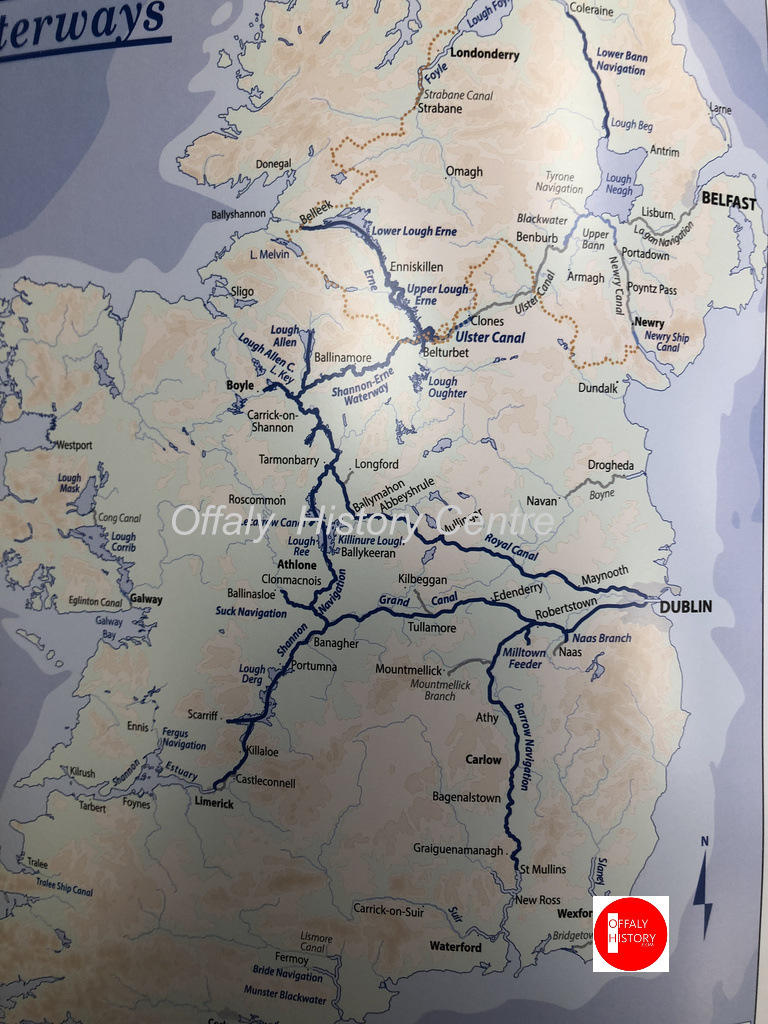
And this ice breaker. What had they on the front of it then to break the ice
There’s nothing …It would be unloaded and sitting up well in the water.
And she could go up and break it down with her weight rather than bash it through
The boat – the front was slanted up. You know, you probably saw yourself.
I know, I know what you mean. Yeah, it could, it would ride up on the ice and its weight would break it down rather than break it. Yeah, yeah.
I remember other boats coming down and they’d have all the wooden boats and they’d have fenders and out in the front so as to wave off the ice from cutting into the timber of the boats All those things that used to go on. And then of course, all steel boats then that didn’t arrive.
So this boat that would go back and forth, bash and back and bash and back, what was that made out of?
.
Steel boat– the steel bought with that charge. But the wooden boats weren’t able to do that
.
Well, I don’t know what they did. Before I could remember anything like that, there would have been a lot of wooden boats then. Or whether they sent down a light board, you know, that could maybe sit up on the ice and break it down.
So the steel boats came after the wooden boats, you know, that were over at number three store. Yeah. Do you remember horses pulling barges?
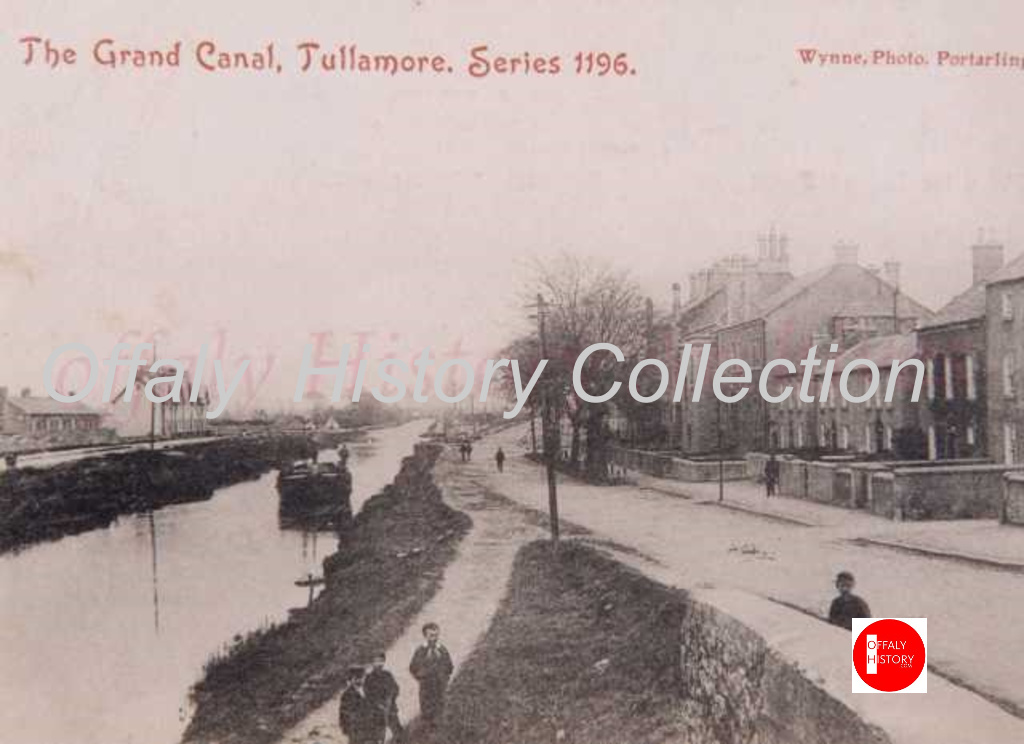
Well, up to a point. The only horse drawn barges in my time were the repair boats. Right.
A repair boat would have no engine. It was only pulled by a horse. And these repair boats, I think, would have a certain distance of the canal to do.
And those – we would call them the gravel boats? That was their name. Gravel boats that were gravel boats coming down to see the horse drawings. And they used to get gravel up, ground up there. They had to go through a sandpit partly
So the gravel boats would, would fill up with gravel. And then what would they do with this gravel?
Well, they’d go off to somewhere where the banks were bad. Take like down here now, Walshes had a way down for their cattle, and they used to have cows going up and down to their land night and morning to milk. And there were the banks were got terrible mucky and cut up and everything like that. And the gravel men would get orders well. You’d have to soil that bit of the bank now to strengthen it up, or to get so low, or maybe water start trickling over it, and then you’d be right trouble – the bank to be eaten away and the whole canal would go through. So that was their job. I remember up and down here a good laugh.
And was that that was, in your childhood.
Oh, yeah. Oh, I’ve been in my teens, and up to the time the canal was debunked.
So. And up for that long. And the horse drawn boats. Oh, yeah.
Yeah, the gravel boats, they were all in. Been horse drawn.
Yeah. All was horse drawn because they’d be stopped for a couple of days loading up the sand. You know, they’d have to dig it out. There’d be, there’d be three men at least, and they had a cabin and all. Not a built up cabin like the, the modern barges, you know, they had a settlement in the bowels of the barge. And I never remember just wholly horse-drawn boats.
No, I never saw them doing commercial work.
Right. Yeah. The only time you saw her strong boats was the gravel boats.
Yeah. Right. Yeah.
And the stables. Then what do you remember about them? You said there were only…It was a rest place
Well before there was motorboats, if you like to say that. It was on horse drawn boats to my knowledge. And there was a stable down opposite the jetty here at the end of number three store. Yeah, yeah. And I remember the manger and all being in that place. So it was motorboats all my life, and I never remember any horses being in it. Right. That time it was all ?????
Do you know what would horses be? It was very small stable.
Now, whether any men ever slept in it or not, I don’t know, but I remember the manger being in it. But that was.
You don’t know whether the horses were fresh. Horses be yoked up to a barge here.
Yeah, the old ones. They’d be left in there. In there?
That’s the way I thought it was.
Sorry, just to go back. Was your father always doing from the time he took over? Did he have the Guinness agency at that time
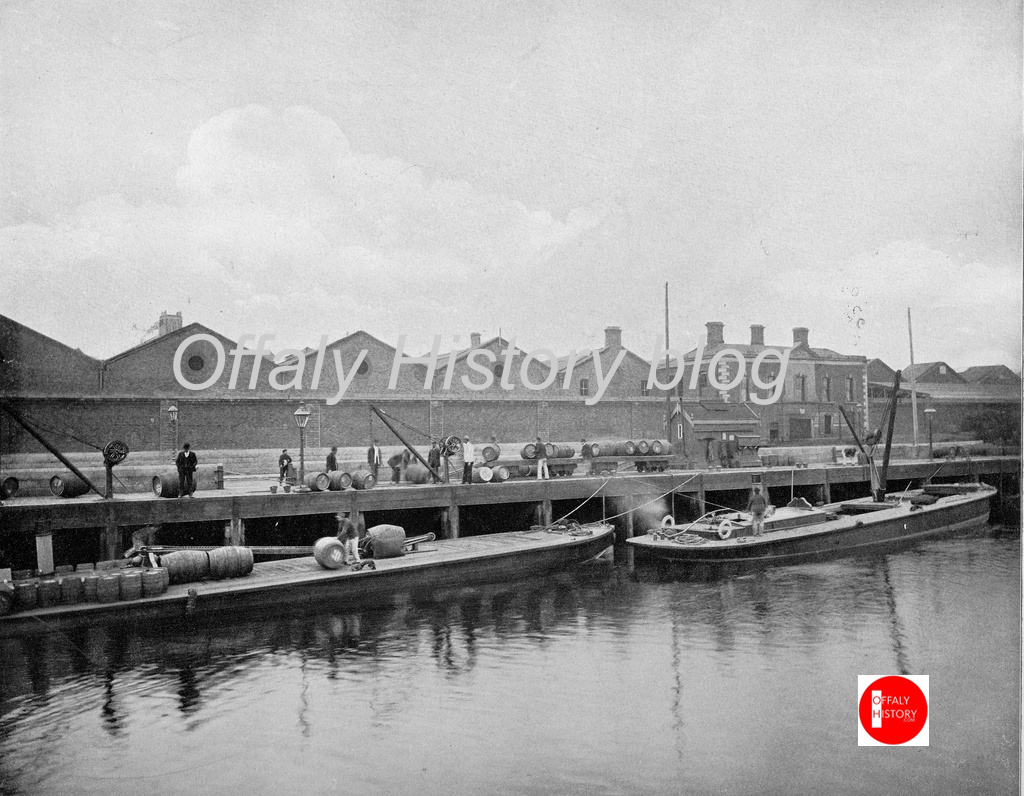
There was handed down from his father.
And would some of those casts then that would be unloaded? Would they be for Williams’s there in Belmont
No they would be for distribution all around. He had a certain area.
So he so it came to your dad and he would distribute it to Williams and whoever.
Well, you see, Williams were supplied by their headquarters in Tullamore. Right. Which brings me back to when daddy started to bottle. So he built a shed over here at the river bank.
When was this?
He started this around 1930 or 31. And so the bottom was all done in this shed at the river bank. And that all went back over to the canal store, where the casks were conditioned. And the stout bottled stout was conditioned there as well.
So this was his first branching out? Yes. Was the coal shed, as we call it. Yes. Beside the river. Yeah. So he built that for that purpose? Yeah. So do you know why he – Was there
any particular reason he started, he branched out into the bottling or did he just see this as a good business opportunity?
Well, I’d say he saw it as a business opportunity. And I think people were often saying to him “George, why don’t you start bottling yourself? I don’t like the way others are handling theirs. It’s not not in that great condition.”
And who else around here would have been doing bottling. And were DEW doing it. Tullamore? Yes and P&H Egan were doing itSo then so the casks would come to the jetty to be unloaded.
Now special big casks would come for the bottling. Right.
They’d be barrel , they’d call it there was the small one – a Firkin – next one was the Kilderkin was the right name for it. And then the next one was Barrel.
Then you went up to Butts and then you went up to Hogsheads. There were huge. Barrels was the biggest now we’d get.
So the barrels, special barrels would come and they’d all would. They’d be kept in the conditioning room filled with bottles with it
No. Well, yeah, they’d be. Yeah. Well, you’d be bottling quite often, you see. You’d have your rotation going along all the time. Conditioned stuff, less conditioned stuff down to bottling, you know.
And was it brought to and from the coal shed on the railway.
Yes. He had a little railway made from the coal shed, as we call it, to the canal store, to my knowledge, the little wagons and the rails.
How many wagons was there?
Two… were, got, up in the Hammond Lane foundry in Dublin as well as the rails.
He was a great man for wandering around Hammond Lane looking for iron work for various jobs.
And how did how did they get here?
Well, they came by boat from, James ???? Harbour and then.
So who used to work down? Who did the bottling?
Well, Tom ????? did and I remember him always and he down there all day on his two knees, and he bottling the stout out of a little siphon yoke with four pipes out of it.
Oh, yeah, I’ve seen one. I saw one of them.
So that’s the way, once you got the flow going with a little rubber bull, right?
And just one bottle, one bottle and then he’d go on and go on all day And Siddy ?? Kierans then was washing the bottles.
So the so tell me so the Guinness what was the Guinness in – before it went as it was going into the siphoning thing, what was the Guinness. Did that go straight from the barrel.
Oh yes. Yes. You tapped the barrel, right. There was a special part on the barrel that you drove your be tapped on with a mallet. Broke through this thing.
Right.
And he broke through and put your your barrels in or a couple of barrels up on a stand stillin they called it. And you put your siphon gadget under the tap. Turn on the tap and just flows out of the barrel was empty when the were bottling over at the river. They had six dozen cases. Right. And and that’s what they were, all the fresh bottle and cork stuff were put into those big cases.
That was very big case.
Oh, It take two to lift them.
Right. So they were all they were. And then they went out to. Did they go out by road then? You see by canal.
Oh no no no no I was around here. Yeah, yeah. They went out in three dozen cases.
And what size bottles were they then.
Oh they were half pint right. Half pint.
.
When G.R had the barrels and the Guinness and the bottles things down there, did people come here to collect it, or did he send deliveries around of casks?
I know he delivered some. Some people would come for stuff, all right. Just they’d be very local. I know Clarkes, Clarkes of Cloghan were one and Flynn’s of Belmont used to come down every day and get – every other day rather, and collect stuff.
So when he was delivering, how would he deliver?
Well, by horse and cart or dray, as we call it.
And there would be one horse (that’s it) A cart horse. Yeah.
And, we’ll say in terms of casks now, what would be a full load
15 or 20 casks
And was he still delivering when by the time he was doing the bottling, was he still delivering by horse and cart? Or had he a lorry at that stage?
Then eventually he bought a lorry and delivered by the lorry.
And is that lorry that he bought the first lorry that he bought. Is that the lorry that’s in the photograph there that has the “Guinness is Good for You” sign on the side of it. That’s it. And that was his first lorry. Yeah. Yeah.
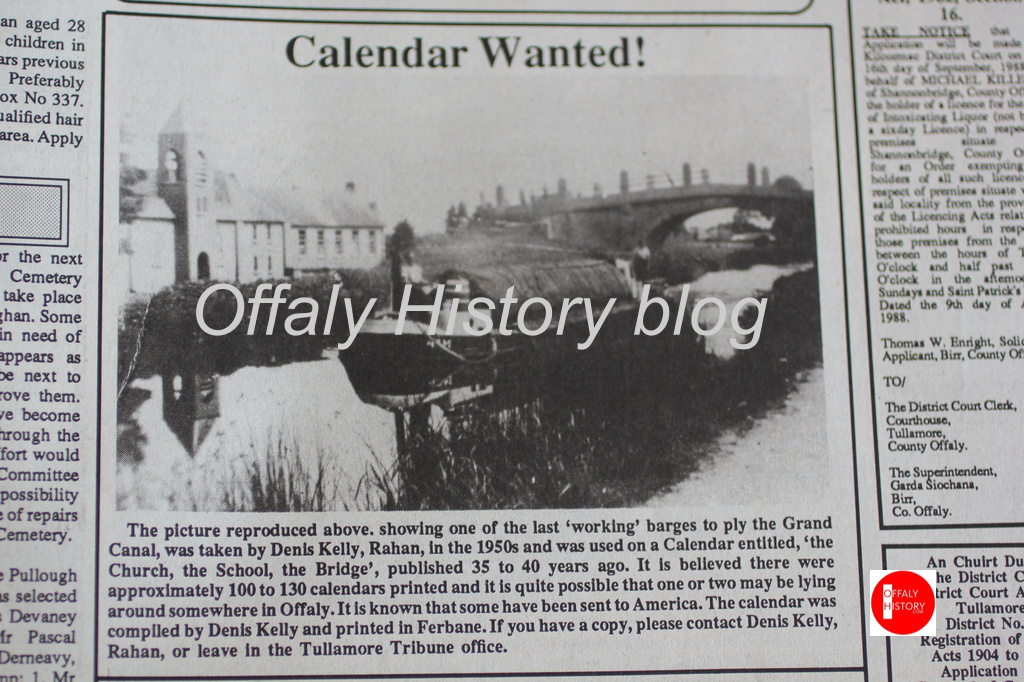
G.R. buying his first lorry was to prove to be important to the changing times. The canal trade declined from the late 1940s through the 50s until in 1959, the last of the commercial trade on the Grand Canal ceased for good. G.R. Robinson retained his license to bottle and distribute Guinness, and moved his operation from the tiny shed at the back of his house to a purpose built facility the other side of the canal, where, alongside his Guinness business, he made and bottled his own brand of soft drinks. His son, Henry Robinson, who you have been listening to, spent much of the rest of his life working in this facility and farming a stretch of land that extended between the River Brosna and the Grand Canal.
 offalyhistoryblog