
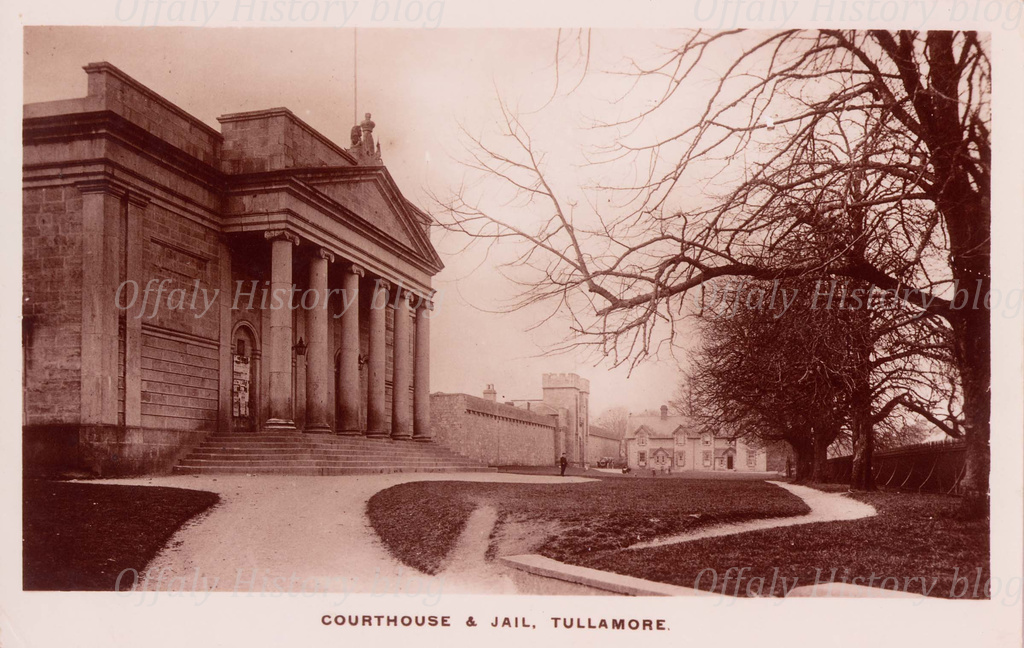
In 1852 Birr in King’s County decided to have a town commission/council in an attempt to improve facilities in the town that had aspirations to be the county town in the 1640s and perhaps up to the 1780s. The earl of Charleville ensured that Tullamore was named as the capital of King’s County after legislation was passed in the House of Commons in 1832 before becoming the capital town in 1835. This was by way of becoming the chief assize town with the full apparatus of county courthouse and jail.
How people travelled in the country towns in the midlands during these years is a mystery as the state of the roads were an absolute disgrace from mud and horse droppings that made travel impossible and unhealthy as the threat of cholera and typhoid fever was prevalent in the country and killed more people than the years of the Great Famine. Indeed, King’s County despite a low death rate from 1847 experienced emigration to an unprecedented level and Birr was no exception as the town suffered a serious decline in the population in the post-famine period.
The persistent poor condition of the roads around Birr and the streets of Birr town was a constant worry for the medical personnel who were aware that the presence of mud on the roads was conducive to the spread of diseases. Birr had limited finances from the rates collected and were constrained by the Local Government Board (LGB) and Grand Jury on how they could spend that money as infrastructure suffered. The roads and streets in Birr were a disgrace with many people falling due to the accumulation of mud and contaminated water and the lack of illumination in the town. Many people in Birr could not believe the lack of positive action from the Grand Jury and County Surveyor in attempting to improve how people could move around without getting destroyed by mud.
The workhouse in Birr was regularly described as a death trap from the footpath’s height of 4 feet above the road and many people fell and incurred serious injuries as the area was poorly lit also. The paving stones in the streets were unable to handle the volume of traffic in the town and were constantly cracking from this pressure as the commissioners sought to source a stronger type of flagging that would last longer than the stones laid down in the 1870s. The lack of finance was a major problem in purchasing durable paving stones and the commissioners had to incur the expense of scavenging the streets in a concentrated effort to improve sanitation levels in the town and halt the spread of diseases from the accumulation of mud on the roads and the streets that were a hazard to people’s health.
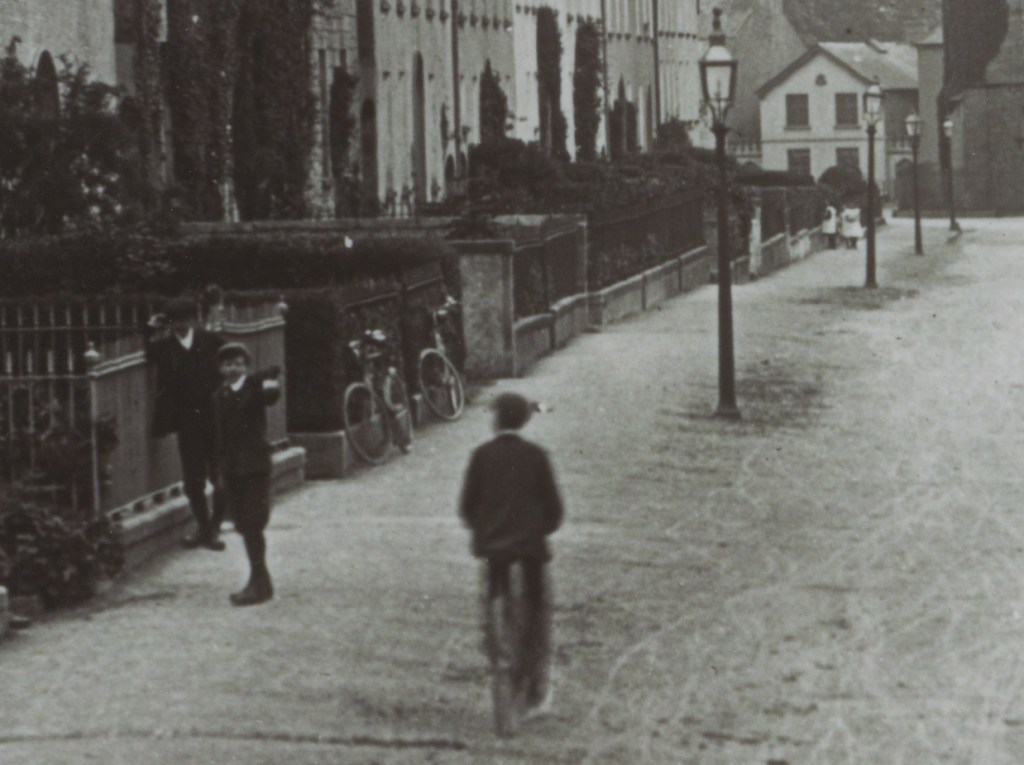
In the 18th and 19th centuries, the Grand Jury system served as a form of local government, responsible for public works and infrastructure within counties. The Grand Jury comprised appointed local landowners, levied taxes (county cess) and oversaw projects like road construction and maintenance. However, Birr’s roads and streets had deteriorated badly over the years of neglect as the town commissioners struggled to afford to clean and scavenge the roads and prevent the build-up of mud and making walking in the town extremely hazardous as the rates that they collected were limited to improve the infrastructure of the town.
Many of the town commissioners were of the opinion that the County Surveyor and Grand Jury were responsible for the maintenance of the roads and streets and continuously petitioned them for funds to do the scavenging works but were repeatedly turned down despite seeking legal advice that they were entitled to ask for this funding. John Julian, solicitor was their legal representative and carefully prepared their petitions when requested by the commissioners and sought legal advice from Queen’s Counsel over the years. December 1872 was the first major disagreement between the Town Commissioners and the County Surveyor and Grand Jury over the maintenance of the roads in the district as finally the patience of the commissioners had snapped in the face of repeated criticism from the locals over the deplorable conditions of the centre of the town that manifested itself into letters sent to the editor of the King’s County Chronicle over the lack of action in making the town safe to travel around on foot.

The Board of Guardians from the workhouse were officially confirmed as the sanitary authority for Birr in 1876 under the Public Health (Ireland) Act instead of the town commissioners but the commissioners still retained the responsibility for looking after the graveyards in the area. A new burial ground was urgently needed for Birr and the commissioners decided to apply for a loan to the LGB – Local Government Board – provided that they could find a suitable site and agree a reasonable price with the owners of the lands as they were still constrained about the amount of the loan that they could apply for under the stipulations contained in the 1854 Towns Improvement (Ireland) Act and their ability to pay back the amount borrowed over a specific period. This amount of red tape frustrated the Birr Town Commissioners as they attempted to improve their town and to secure the health of the inhabitants as they argued that this was only possible by having the roads and streets constantly scavenged and cleaned as their row with the Grand Jury intensified during the 1880s and 1890s from the persistent refusal of their petitions for funds to complete works on the road and streets. Tenders for flagging stones tended to be awarded to the lowest one submitted due to the constraints on the finances of the commissioners with the paving constantly needing to be replaced from breaking from the volume of traffic in Birr and the dubious quality of the ones provided by the contractors. Some of the commissioners began to source better paving stones by contacting other town commissions as far away as Belfast for example and after the stones were recommended as of a high quality, an order was placed by the street committee of Birr Town Commissioners for a consignment to be delivered to the town. Other durable paving was also secured from a recommendation from Clare Town Commissioners that the stones they used were long lasting and had the ability to handle whatever traffic was travelling over them and although this placed a strain on the rates collected in Birr, the supplies were acquired at a reasonable price.
Legal Opinion on role of commission and grand jury
Matters came to a head in 1895 as a legal opinion was delivered by John Atkinson Q.C. that both the Birr Town Commissioners and Grand Jury are equally responsible for the scavenging and cleaning of the roads and the streets, that was not accepted by the Grand Jury who appealed this decision. Pending this appeal, the commissioners held a special meeting and it was decided that they would employ men to scavenge the roads and the streets as they placed a priority on improving the sanitation levels in the town and by the end of 1895, 14 men were fully employed to carry out these works. James Kennedy – one of the commissioners – declared that it was their mission to ‘promote health’ in Birr and he was constantly at loggerheads with the Grand Jury that they should be contributing towards the expenses incurred over the years for scavenging and cleaning of the streets. This meeting also agreed to serve notice that ‘Shopkeepers should be compelled to remove the refuse from the fronts of their shops’ as reports in the Dublin newspapers commented on the continuing poor condition of the streets in Birr that was condemned by the commissioners as misleading as the scavenging work was repetitive and provided badly needed employment in the town. This work was the subject of a letter to the editor of the King’s County Chronicle that praised the continuing efforts to keep the streets clean and passable for people to move around without having to sidestep mud heaps and pools of water in tandem with a favourable report from the Chief Medical Officer, Dr. Woods, that sanitation levels were much improved as a result of these works. With the result of the appeal from the Grand Jury over the legal opinion of John Atkinson still pending, the commissioners decided to continue the scavenging works in 1896 in the hope that the appeal would be dismissed and the Grand Jury would have to contribute financially towards this work. An editorial comment in the King’s County Chronicle published on July 2 stated that it was their opinion that Birr Town Commissioners were entitled to be compensated for scavenging works by the Grand Jury and that a sum should be agreed by an independent third party. Finally, a judgement was delivered from the appeal by the Grand Jury that they ‘present a sum to the Town Commissioners or their nominees sufficient to cover their proportion of the expenses’ that was welcomed by the commissioners as justification for their long running battle with the Grand Jury. However, would the Grand Jury abide by this decision and offer a sum that would alleviate the pressure on the finances of Birr Town Commissioners for the scavenging works remained to be seen for the months ahead as the commissioners were now exploring the possibility of a waterworks for the town and the potential costs involved.
The Town Sergeant reported that some areas in the town were in need of scavenging more than others and he was instructed by the commissioners to carry out whatever works he deemed essential over other areas of the town. It was also decided that a petition be prepared for the Road Sessions that the County Surveyor be requested to compile a report on the costs involved for cleaning all of the roads in Birr as the commissioners still had not received any contribution from the Grand Jury for scavenging and cleaning works. A special meeting of the commissioners in July 1897 decided upon the motion of Garvey that was seconded by Nesbitt to place temporary control of the roads in the hands of the County Surveyor until the next Assizes and hold him responsible for the maintenance and repairs of the roads. However the condition of some of the roads continued to worsen during this period as the County Surveyor was clearly not doing his job as people continued to dump rubbish along some of these roads that were slow to be removed.
The commissioners eventually decided to advertise again for the scavenging of the streets and the cleaning of the stench traps as James Fern was awarded the contract as rumours began to circulate from London that town commissioners were to be replaced by urban and rural councils that would have full responsibility for the maintenance of the roads and the streets of their districts and put an end to the Grand Jury system in Ireland. The Local Government Ireland Act 1898 marked the end of town commissioners in Ireland that in Birr expanded the electorate from 219 people eligible to vote to 1,500 and also entitled women to vote for the first time with 165 entitled to vote (see an earlier blog)
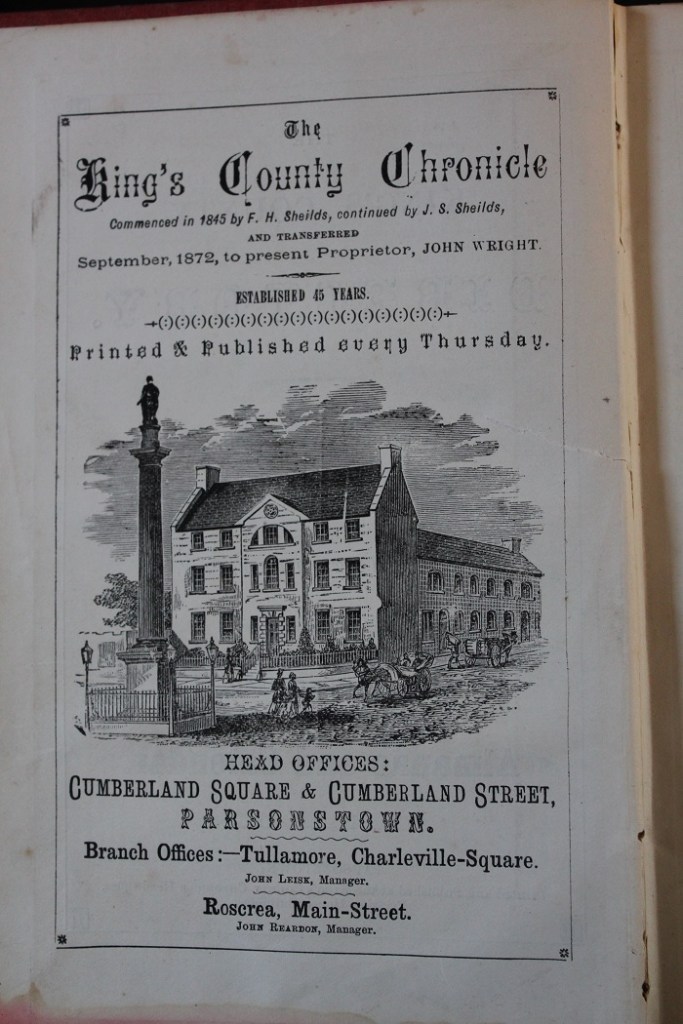
The condition of the streets remained poor as mud continued to build up as more letters of complaint were received by the King’s County Chronicle that these deplorable conditions were a serious threat to the health of the locals as the commissioners took exception to the accompanying editorial comment on sanitation levels in the town. ‘All contagious diseases must have a beginning and we are not to wait till they have gained a firm footing in the neigbourhood before calling attention to them’ provoked the anger of the commissioners as their time was coming to an end before elections in 1899 as Edward Treacy was elected as the first chairman of Birr Urban Council. The new authority met and committees were formed to improve the infrastructure and sanitation levels in the town and to meet with the County Surveyor and agree what were the main roads and to appoint a Town Surveyor for Birr. This appointment needed to be made before Birr could approach the county council for discussions over the maintenance of the main roads as Henry Browne was appointed to this position in June 1899 and was a qualified Chief Engineer. The name of the council was officially changed to Birr Urban Council from Parsonstown in July 1899. New paving stones were needed for many of the streets in the town as Browne reported monthly to the council on the costs incurred for the maintenance of the roads and streets. He recommended that the council apply for a loan to improve the condition of the footpaths if Birr wanted to attract a permanent army regiment in the town and to try and secure favourable repayment terms. A row with the Earl of Rosse over the Manor Mill Wheel had soured relations and the questions of tolls and customs for the town also affected this relationship with the looming threat of a legal confrontation on the horizon. Rosse was always a trusted ally of the commission for many years and fought the cause of Birr repeatedly against the Grand Jury to secure funding for works in the town and improve the infrastructure to attract more tourists that would benefit Birr economically.
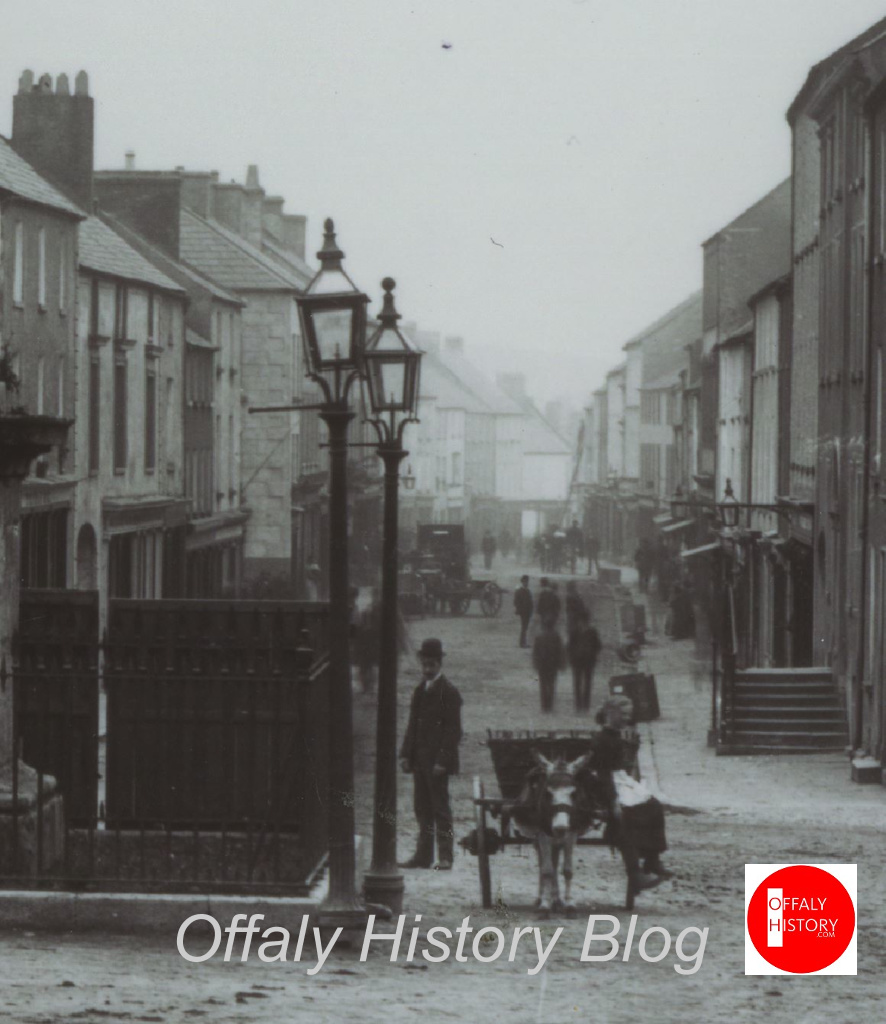
The Birr Main Street in the 1890s was a hive of activity. The roads were not steam rolled for another 15 to 20 years. Courtesy of National Library of Ireland.

